Monmouth County summers get hot and sticky fast. If your AC is working overtime by June, a ceiling fan can make every room feel cooler without spiking your electric bill. But before you call for one, you probably want to know: what does ceiling fan installation cost, and is it really worth it?
This guide breaks down ceiling fan installation cost for Long Branch and Jersey Shore homes, explains how fans help you save on cooling, and covers the electrical safety issues that make this a job for a licensed pro especially in older NJ homes.
In this article:
- What ceiling fan installation costs, by scenario
- How fans lower your AC bill in summer
- Why older Monmouth County homes often need electrical upgrades first
- Safety reasons to skip the DIY route
- FAQs on cost, timing, and permits
How Much Does Ceiling Fan Installation Cost?
The short answer: it depends on what’s already in your ceiling.
If you’re swapping an old light fixture for a fan, the job is usually quick and affordable. If there’s no existing electrical box or wiring, the cost goes up because an electrician has to run new wiring and install a fan-rated box.
Nationally, professional ceiling fan installation runs $146 to $360 on average, with labor alone costing $50 to $250. Fan units themselves range from about $50 for a basic model to $1,400 or more for a high-end designer fan. Installing a fan where wiring already exists typically costs $100 to $300 for a standard setup (Angi, 2026).
Key takeaway: Replacing an existing light fixture with a fan is the cheapest option. Adding a fan where there’s no wiring at all costs more, but it’s often necessary in older Jersey Shore homes.
Cost by Scenario
| Scenario | What’s Involved | Typical Cost Range |
|---|---|---|
| Replace the existing light fixture with a fan | Swap fixture, may need to confirm box is fan-rated | $100 – $300 |
| New fan, existing wiring, but standard (non-fan-rated) box | Upgrade the box to fan-rated, and mount the fan | $150 – $350 |
| New fan, no existing wiring or box | Run new wiring, install a fan-rated box, and mount the fan | $300 – $600+ |
| Multiple fans (whole-home project) | Per-fan pricing, some labor savings when bundled | $250 – $500 per fan |
| High-end/designer fan with remote or smart controls | Premium fan unit plus standard install labor | $400 – $1,400+ |
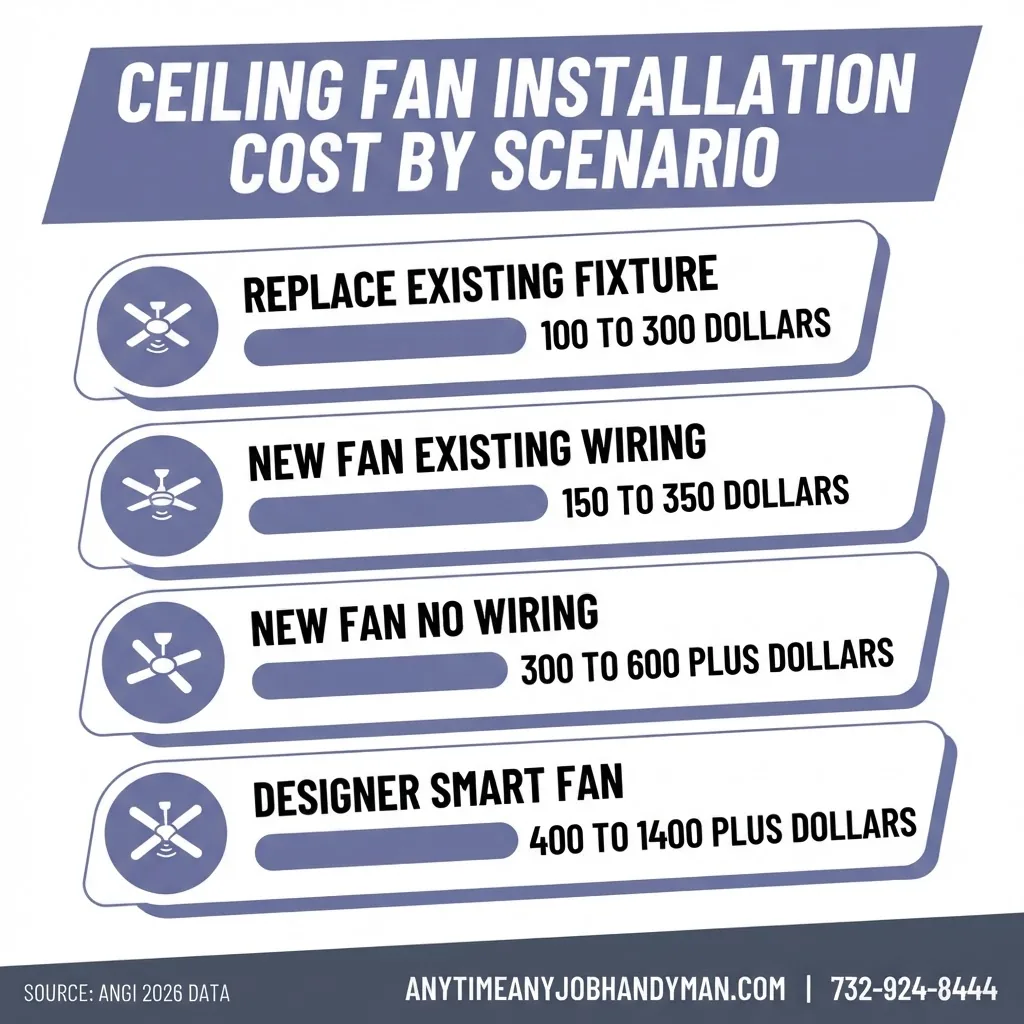
Cost ranges reflect national averages reported by Angi and can vary based on ceiling height, attic access, and fan type (Angi, 2026).
If you’re also dealing with an outdated electrical panel or knob-and-tube wiring common in older Long Branch homes, our electrical services in Long Branch, NJ page covers what an upgrade typically involves.
How Ceiling Fans Cut Your Summer Cooling Costs
A ceiling fan doesn’t cool a room the way an air conditioner does. It cools you by moving air across your skin and creating a wind-chill effect. That’s why a fan does nothing for an empty room — turn it off when you leave.
Because a fan makes you feel cooler at a higher temperature, you can raise your thermostat setting without losing comfort. According to the Department of Energy, a ceiling fan lets most people raise their thermostat by a few degrees and still feel just as comfortable, which reduces how hard your AC has to work.
Choosing an ENERGY STAR-certified fan adds another layer of savings: these fans are rated to run up to 44% more efficiently than standard models (ENERGY STAR, Ceiling Fans).
Key takeaway: Fans let you raise your thermostat a few degrees without feeling warmer, which means less AC runtime and a lower summer electric bill.
For Jersey Shore homes battling humidity as much as heat, pairing ceiling fans with other cooling strategies makes a bigger difference. If you’re weighing whole-house options, our guide on how to keep your house cool without AC in NJ summers covers additional tactics, and our 5 easy ways to improve your home’s energy efficiency post has more year-round tips.
Why Older Monmouth County Homes Need an Electrical Check First
Many homes in Long Branch and around Monmouth County were built decades before ceiling fans were standard. That means the electrical box in the ceiling may not be rated to hold a fan’s weight or handle its motion.
A standard light fixture box is designed to support a light fixture, not the constant vibration and pull of a spinning fan. Mounting a fan on the wrong box can cause it to loosen, wobble, or fall over time. This is one of the biggest reasons ceiling fan installation isn’t a simple DIY light-swap in older houses.
If your home still has original wiring from before a major renovation, it’s worth having a pro check the box and circuit before any fan goes up. This is especially true if you’re adding fans to multiple rooms as part of a larger comfort upgrade, similar to homeowners who add a whole-house attic fan to move hot air out of upper floors.
Key takeaway: An older home’s electrical box may not be rated for a ceiling fan’s weight and motion — get it checked before installation, not after the fan starts to wobble.
Why This Is a Job for a Licensed Electrician, Not DIY
Ceiling fan installation looks simple in a video. In practice, it involves live electrical wiring, working overhead, and often confirming whether your box and circuit can safely support the load.
Faulty wiring and electrical malfunctions are a leading cause of home fires. Electrical distribution and lighting equipment cause thousands of home fires every year, with wiring and related equipment responsible for a notable share of fire deaths (NFPA, Home Fires Caused by Electrical Failure or Malfunction).
OSHA also identifies missing or damaged ground-fault protection and improperly used wiring as among the most common causes of electrical injury, and it defines a “qualified person” as someone trained and familiar with the specific hazards of the equipment they’re working on (OSHA, Electrical). A licensed electrician meets that bar. A weekend DIY project usually doesn’t.
Hiring a licensed pro also means:
- The fan-rated box is installed to code, not just “good enough”
- Wiring is properly grounded and protected
- You avoid shock or fire risk from overloaded or reversed wiring
- The work is documented in case it comes up during a home sale or insurance claim, similar to what we cover in our NJ home insurance claims guide
Key takeaway: Electrical work is one of the top causes of home fires. A licensed electrician installs the correct fan-rated box and wiring so you’re not gambling on a DIY shortcut.
Getting Ready for Ceiling Fan Season
Ceiling fan installation is a small project with an outsized payoff — lower AC bills, more even comfort room to room, and a ceiling upgrade that pairs well with other smart-home touches. If you’re already updating fixtures, it’s worth bundling the work with related upgrades, like smart thermostat setup, so an electrician handles everything in one visit.
Any Time Any Job Handyman installs ceiling fans throughout Long Branch and all of Monmouth County, from simple fixture swaps to full electrical upgrades for new wiring. We’re available 24/7, 365 days a year, so scheduling around your summer plans is easy.
Ready to beat the heat? Explore our home maintenance services or call or text (732) 924-8444 for a free quote in 30 minutes.
FAQs
1. How much does it cost to install a ceiling fan in NJ?
Most ceiling fan installations cost between $100 and $600, depending on whether you’re replacing an existing fixture or need new wiring and a fan-rated electrical box installed. Fan units themselves range from about $50 to $1,400 or more (Angi, 2026).
2. Can I install a ceiling fan myself?
You can, but only if your existing box is already fan-rated and you’re comfortable working with live wiring. Many older Monmouth County homes have boxes that aren’t fan-rated, which means a licensed electrician needs to upgrade the box first. Given that electrical failures are a leading cause of home fires, hiring a pro is the safer call (NFPA).
3. Will a ceiling fan actually lower my AC bill?
Yes. A ceiling fan creates a wind-chill effect that lets you feel comfortable at a higher thermostat setting, which reduces how much your AC has to run. Choosing an ENERGY STAR-certified fan adds extra savings, since those fans can run up to 44% more efficiently than standard models (ENERGY STAR).
4. How long does ceiling fan installation take?
A straightforward fixture swap usually takes under an hour. Installing a fan where new wiring or a fan-rated box is needed can take a few hours, depending on ceiling access and the length of wire run required.
5. Do I need a permit to install a ceiling fan in Monmouth County?
Simple fixture replacements generally don’t require a permit. Projects that involve new circuits or significant wiring changes may require one, depending on your township. Your electrician can confirm what applies to your specific job.