Key Takeaways
- A professional AC tune-up in Long Branch costs $75 to $200 and catches problems before they become mid-heatwave breakdowns.
- Replacing a dirty air filter alone can improve AC efficiency by 5 to 15% and takes five minutes.
- Late August and early September are the ideal window for maintenance — after peak summer demand but before you forget about cooling until next June.
- Shore-area salt air and humidity accelerate coil corrosion and mold growth inside Long Branch AC units.
- Skipping late-summer maintenance means entering next cooling season with last year’s dust, wear, and undetected refrigerant leaks still in the system.
Late summer AC maintenance in Long Branch, NJ costs between $75 and $200 for a professional tune-up in 2026. August and early September are the smartest time to do it — your system has worked hard through July and August heat, and catching wear now prevents a breakdown during the next heatwave or a costly surprise when you turn the AC on next spring. Here is what to check, what it costs, and what Long Branch homeowners can handle themselves.
Why Late Summer Is the Best Time for AC Maintenance
Most homeowners think about AC service in May or June, right before cooling season starts. That is a reasonable approach, but late summer maintenance serves a different and equally important purpose.
By August, your air conditioner has run through hundreds of hours of operation. Filters are loaded with dust and pollen. Condenser coils have accumulated debris. Refrigerant levels may have dropped from small leaks that developed under continuous load. Electrical connections have expanded and contracted through daily cycling.
Servicing the system now accomplishes three things:
- Catches mid-season wear before it becomes a failure during September heat spikes
- Prepares the unit for shutdown so it sits clean and dry through fall and winter
- Documents system condition so you know whether the unit is worth another season or needs replacement planning before next spring
Long Branch’s shore climate adds urgency. Humid salt air corrodes condenser fins, promotes mold on evaporator coils, and pulls more moisture through the system than inland NJ homes experience. A unit that runs fine in June can show strain by August in coastal neighborhoods.
What a Professional AC Tune-Up Costs in Long Branch (2026)
Professional maintenance covers tasks that require specialized tools, refrigerant handling certification, or rooftop access.
| Service Type | Typical Cost Range | Notes |
|---|---|---|
| Standard AC tune-up | $75 to $200 | Inspection, cleaning, filter check |
| Tune-up with coil cleaning | $100 to $400 | Adds evaporator and condenser coil wash |
| Refrigerant recharge (R-410A) | $150 to $500 | Only if leak is found and repaired first |
| Condensate drain cleaning | $75 to $250 | Clears algae and blockage from drain line |
| Belt and motor replacement | $200 to $600 | For older units with worn mechanical parts |
| Capacitor or contactor replacement | $150 to $400 | Common mid-season electrical failures |
| Duct inspection and sealing | $250 to $800 | Reduces cooled air lost in unconditioned spaces |
Most Long Branch homeowners spend $100 to $200 on a standard late-summer tune-up. That is significantly less than an emergency repair call when the system dies on a 95-degree day — which typically runs $300 to $800 or more depending on the failed component.
DIY AC Maintenance You Can Do This Weekend
Several maintenance tasks require no special tools and make a measurable difference in performance and efficiency.
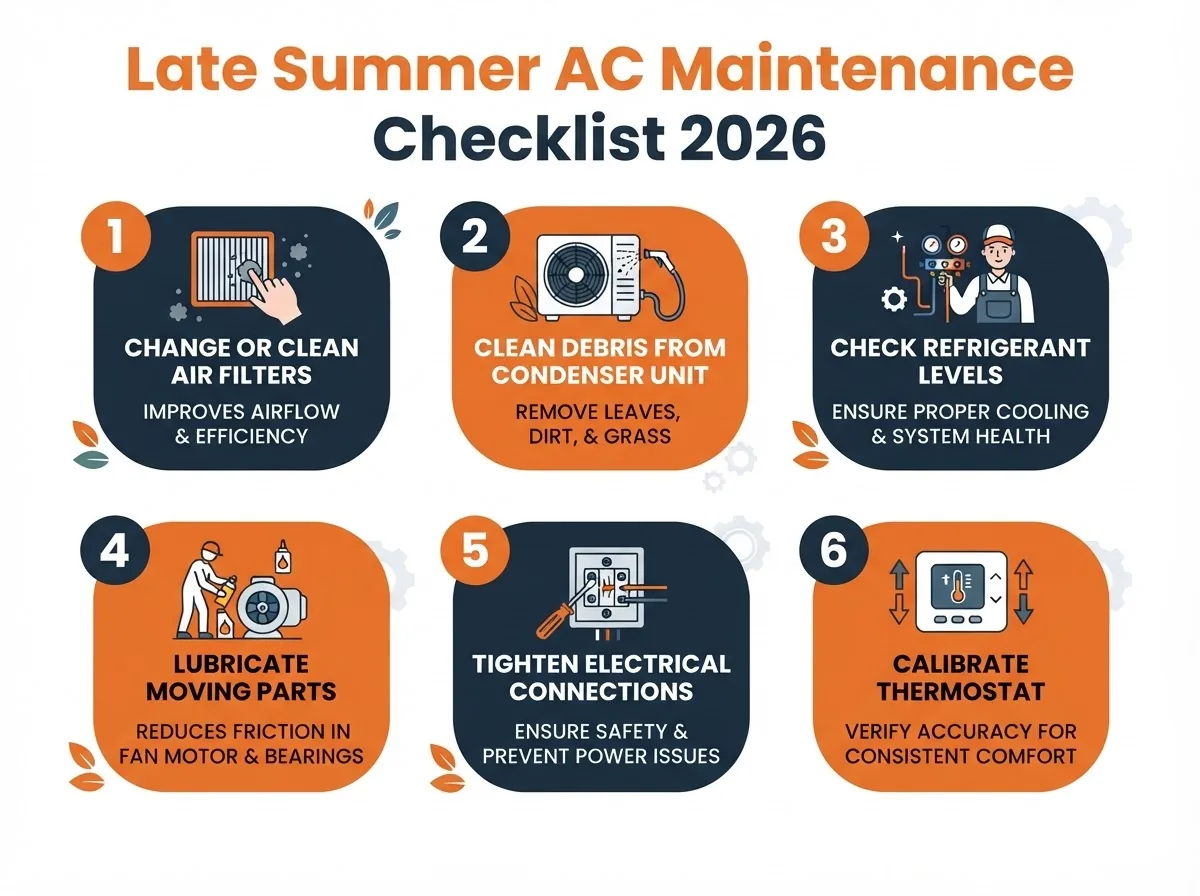
Replace or clean the air filter. This is the highest-impact DIY step. A clogged filter restricts airflow, forces the blower motor to work harder, and can cause the evaporator coil to freeze. Check the filter monthly during cooling season. Replace fiberglass filters every 30 days. Pleated filters last 60 to 90 days depending on household dust and pet hair.
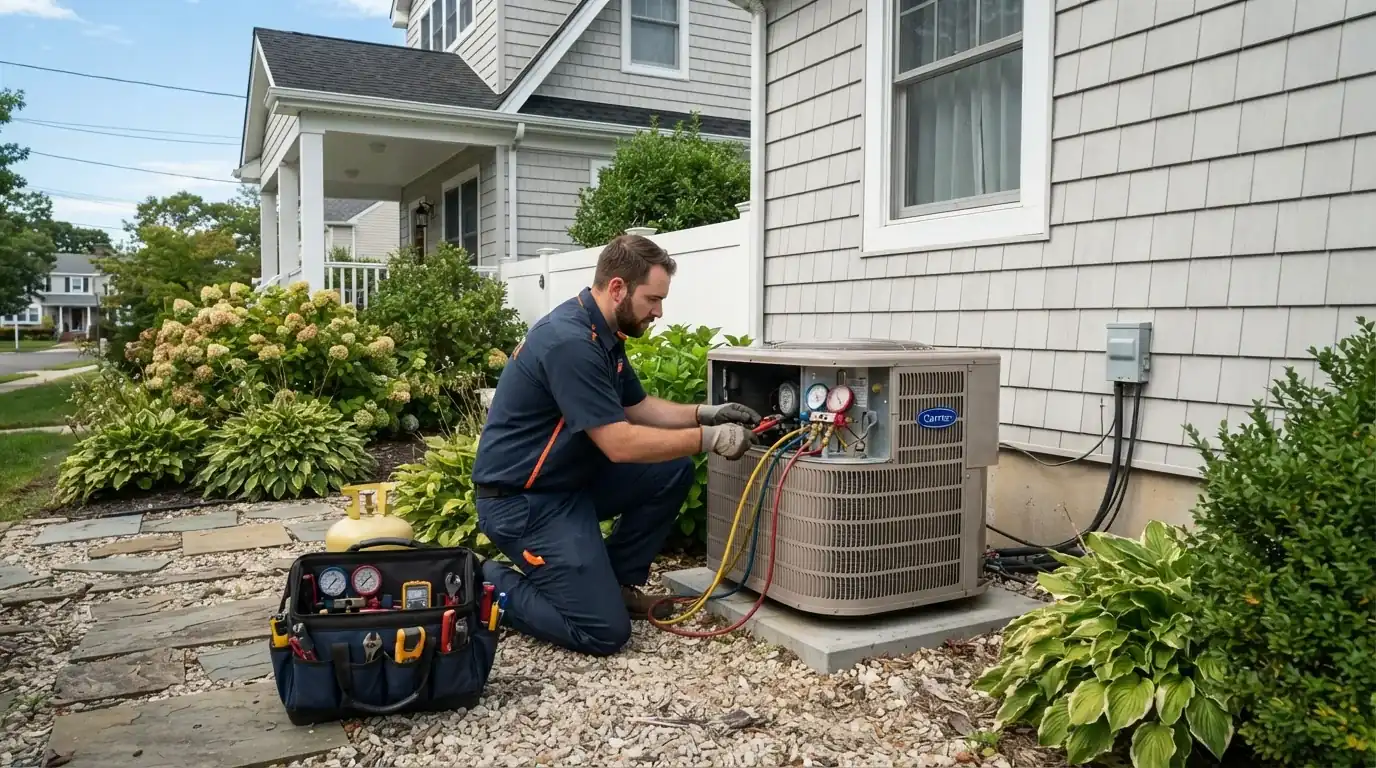
Clear debris from the outdoor condenser unit. Leaves, grass clippings, and beach sand accumulate around and inside the condenser cabinet over the summer. Turn off power to the unit, remove the top grille if accessible, and gently clean fins with a garden hose — spray from the inside out. Keep at least two feet of clearance on all sides.
Clean the condensate drain line. Algae and mold block the drain line that carries moisture away from the evaporator coil. A blocked drain causes water to back up and overflow — often into the furnace cabinet or onto floors. Pour a cup of white vinegar or diluted bleach into the drain access point near the indoor unit every month during cooling season.
Check thermostat settings and batteries. Confirm the thermostat is set to “cool” with the fan on “auto.” Replace batteries in battery-powered thermostats before they die mid-season. If you have a programmable or smart thermostat, verify the schedule still matches your household routine after summer travel.
Inspect visible ductwork in basements and crawl spaces. Look for disconnected joints, visible gaps, and insulation that has fallen off. Seal small gaps with foil tape — not duct tape, which fails in temperature swings.
Listen for unusual sounds. Grinding, squealing, or rattling from the indoor or outdoor unit during startup signals belt wear, bearing failure, or loose components. Note when the sound occurs and call for service before the component fails entirely.
For tasks that involve electrical components, refrigerant, or rooftop units, leave the work to a professional. Our home repair services team handles AC maintenance alongside other seasonal tasks in a single visit.
What a Professional Tune-Up Includes
A thorough late-summer AC tune-up goes beyond what homeowners can do from the ground.
Electrical inspection. The technician checks voltage and amperage draw on the compressor and blower motor, tightens connections, and tests capacitors and contactors. Weak capacitors are one of the most common causes of AC failure — and one of the cheapest to replace proactively.
Refrigerant level check. Low refrigerant means a leak exists somewhere in the system. Topping off without finding the leak is a temporary fix that gets expensive quickly. A tune-up includes pressure testing and leak detection.
Coil cleaning. Evaporator and condenser coils transfer heat. When coated with dust, pollen, or salt residue, efficiency drops 10 to 30 percent. Professional coil cleaning uses appropriate solvents and pressure levels that do not bend delicate fins.
Blower motor and belt inspection. The blower circulates cooled air through your ductwork. Worn belts slip and reduce airflow. Dirty blower wheels add resistance. Both are checked and serviced during a tune-up.
Condensate system check. The drain pan, drain line, and float switch (if equipped) are inspected and cleared. Overflow from a blocked drain is one of the most common water damage events in Long Branch homes during cooling season.
Thermostat calibration. The technician verifies the thermostat reading matches actual room temperature and that the system cycles on and off at the correct setpoints.
Overall system assessment. After inspection, you get a report on the unit’s condition — what is fine, what needs monitoring, and what should be replaced before next season. That information helps you budget for a new system if the current one is approaching end of life.
Warning Signs Your AC Needs Attention Before You Shut It Down
Do not ignore these signs just because cooling season is ending. Problems left over winter often worsen and cost more to fix next spring.
Weak airflow from vents. Could be a clogged filter, failing blower motor, or ductwork obstruction. Reduced airflow also reduces dehumidification — a real problem in Long Branch’s humid climate.
Warm air instead of cool air. Low refrigerant, a failed compressor, or a stuck reversing valve (on heat pump systems) all cause this. Running the system in this condition wastes electricity without cooling your home.
Short cycling. The system turns on and off every few minutes instead of running sustained cycles. Causes include oversized units, low refrigerant, frozen evaporator coils, or a failing thermostat.
Unusual odors. Musty smells suggest mold on the evaporator coil or in the drain pan. Burning smells indicate electrical problems. Either requires professional attention.
Ice on the refrigerant line or evaporator coil. Ice formation means restricted airflow or low refrigerant. Running the system while iced over can damage the compressor — the most expensive component in the system.
Water stains or puddles near the indoor unit. Condensate overflow from a blocked drain line. Water damage to floors, ceilings, and furnace components adds up fast.
If you notice any of these, schedule service before shutting the system down for the season. Our crew is available 24/7 across Long Branch and Monmouth County — call (732) 924-8444 anytime.
Long Branch Shore Climate: What Makes AC Maintenance Different Here
Coastal Monmouth County presents maintenance challenges that inland NJ homeowners do not face.
Salt air corrosion. Condenser units installed near the ocean or bay accumulate salt residue on fins and coils. Salt accelerates metal corrosion and reduces heat transfer efficiency. Rinse the outdoor unit with fresh water monthly during cooling season if you live within a mile of the shore.
Higher humidity load. Long Branch AC systems run longer dehumidification cycles than inland systems at the same temperature setting. That means more condensate production, faster drain line clogging, and greater evaporator coil moisture exposure. Mold growth on coils is more common here.
Seasonal occupancy patterns. Many Long Branch properties serve as second homes or seasonal rentals. Units that sit idle for weeks, then run at full capacity when guests arrive, cycle through extreme load changes. A pre-arrival tune-up prevents guest complaints and emergency calls.
Sand and pollen intake. Beach-area pollen counts and fine sand particles clog filters faster than suburban inland locations. Check filters every two to three weeks during peak summer if your home is near the beach.
Storm exposure. Late summer is hurricane season. Secure outdoor condenser units with hurricane straps before storms arrive. Trim branches that overhang the unit. After any storm, inspect the condenser for debris impact and standing water before restarting the system.
Preparing Your AC for the Off-Season
Once late-summer maintenance is complete, a few steps protect the system through fall and winter:
Run the system on dry days in September. After cleaning, run the AC for an hour on a low-humidity day to dry internal components. Storing a wet system over winter promotes mold and corrosion.
Cover the outdoor condenser (optional). A breathable cover prevents leaf accumulation and debris but is not strictly necessary. Never run the system with a cover on. Remove the cover completely before starting the AC next spring.
Switch thermostat to heat or off. If you have a heat pump, your HVAC contractor can advise on the best setting for the transition season. For AC-only systems, turn the thermostat to “off” or switch to heating mode.
Schedule spring startup early. Book your pre-season tune-up in April — before HVAC companies hit peak demand in May and June. You get better appointment availability and enter cooling season with a verified system.
Combine AC maintenance with other end-of-summer tasks through our home maintenance services program. One visit can cover filter changes, gutter checks, caulk inspection, and electrical outlet testing alongside the HVAC work.
When Repair Makes Sense vs. When to Plan Replacement
AC units typically last 12 to 17 years with regular maintenance. Long Branch’s salt air and heavy seasonal use can push toward the lower end of that range.
Repair the unit if:
- It is under 10 years old
- The repair cost is less than 50% of replacement cost
- Refrigerant type (R-410A) is still readily available
- The system cools effectively when running
Start planning replacement if:
- The unit is over 15 years old and needs any major repair
- Refrigerant leaks recur after previous repairs
- Energy bills have risen significantly with no change in usage
- The compressor or heat exchanger has failed (repair cost often exceeds replacement value)
- The system uses R-22 refrigerant (phased out; recharge costs are prohibitive)
A late-summer tune-up gives you a clear condition report to make this decision with data rather than under pressure during a heatwave.
Need AC maintenance, repair, or a full system check before cooling season ends? Any Time Any Job Handyman has served Long Branch and Monmouth County for more than 15 years. We are licensed, insured, and available 24/7. Call or text (732) 924-8444 anytime, or reach us through our contact page.
Frequently Asked Questions
1. How much does AC maintenance cost in Long Branch NJ?
A standard AC tune-up in Monmouth County runs $75 to $200. A tune-up with full coil cleaning costs $100 to $400. Price varies by system type (central air vs. mini-split), unit accessibility, and whether any worn parts need replacement during the visit.
2. Is late summer too late for AC maintenance?
No — it is actually ideal for a second check. Early-spring maintenance prepares the system for the season ahead. Late-summer maintenance catches wear from months of operation and prepares the unit for off-season storage. Homes that only service AC once per year benefit most from late-summer timing because the technician sees the system under real load conditions.
3. How often should I replace my AC filter in Long Branch?
During peak cooling season (June through September), check filters every 30 days and replace as needed. Standard fiberglass filters typically need monthly replacement. Higher-quality pleated filters last 60 to 90 days. Homes near the beach or with pets may need more frequent changes due to sand and hair accumulation.
4. Can a handyman do AC maintenance?
A handyman can handle filter replacement, condenser debris clearing, condensate drain flushing, and thermostat battery changes. Tasks involving refrigerant handling, electrical diagnostics, and coil cleaning with specialized equipment require an HVAC technician with EPA certification for refrigerant work. Our team handles the DIY-friendly tasks and coordinates HVAC service when the system needs professional-level work.
5. Why does my AC smell musty when I turn it on?
Musty odors usually mean mold or mildew on the evaporator coil, in the drain pan, or inside the ductwork near the air handler. Long Branch’s humidity makes this common. Cleaning the evaporator coil, flushing the condensate drain, and replacing a bacteria-loaded filter typically resolve it. If the smell persists after cleaning, duct inspection may be needed to check for mold in lined duct sections.