Key Takeaways
- GFCI outlet installation in Long Branch typically costs $130 to $300 per outlet including labor and materials.
- AFCI breaker installation runs $150 to $300 per circuit and protects against arc faults that standard breakers miss.
- Outlets that buzz, feel warm, spark, or fail to hold plugs firmly are safety hazards that need professional attention immediately.
- NJ adopted updated electrical code requirements for GFCI and AFCI protection in kitchens, bathrooms, garages, and bedrooms — older Long Branch homes often fall short.
- Upgrading outlets before selling or renovating protects your family now and avoids inspection delays later.
Electrical outlet upgrades in Long Branch, NJ cost between $130 and $300 per GFCI outlet and $150 to $300 per AFCI circuit in 2026. GFCI outlets prevent shock in wet areas. AFCI breakers reduce fire risk from damaged wiring. If your home was built before 2000, there is a good chance some outlets do not meet current NJ code — and a few may be outright safety risks. Here is when to upgrade, what it costs, and when to call a professional.
GFCI vs. AFCI: What Each One Does
Modern electrical safety relies on two types of protection that older homes often lack.
GFCI (Ground Fault Circuit Interrupter) outlets monitor the current flowing in and out of a circuit. If even a small amount of current leaks — through water, a person, or faulty insulation — the GFCI shuts off power in milliseconds. This prevents electrocution in wet locations.
GFCI protection is required in:
- Bathrooms
- Kitchens (countertop outlets)
- Garages and unfinished basements
- Outdoor outlets
- Laundry areas
- Any outlet within 6 feet of a sink
AFCI (Arc Fault Circuit Interrupter) breakers detect dangerous electrical arcs — sparks caused by damaged, pinched, or deteriorating wiring. Standard breakers only trip on overloads and short circuits. They do not catch the low-level arcing that causes many residential electrical fires.
AFCI protection is required on most circuits serving:
- Bedrooms
- Living rooms and family rooms
- Hallways
- Closets
- Dining rooms
- Sunrooms
Long Branch’s housing stock includes many homes built in the 1940s through 1970s with original two-prong outlets, ungrounded wiring, and no GFCI or AFCI protection anywhere. Upgrading is not just a code checkbox — it is a meaningful safety improvement for families.
What Outlet Upgrades Cost in Long Branch NJ (2026)
Pricing depends on whether you are swapping a single outlet, adding GFCI protection to an existing circuit, or upgrading breakers in the panel.
| Upgrade Type | Typical Cost Range | Notes |
|---|---|---|
| GFCI outlet replacement (single) | $130 to $300 | Includes outlet and labor |
| GFCI outlet replacement (multiple, same visit) | $100 to $200 each | Lower per-unit cost when bundled |
| Standard to GFCI outlet swap | $150 to $250 | Straightforward if wiring is modern |
| Two-prong to three-prong grounded outlet | $150 to $350 | May require rewiring if no ground exists |
| New outlet installation (with wiring) | $200 to $500 | Depends on distance from panel |
| AFCI breaker installation (per circuit) | $150 to $300 | Replaces standard breaker in panel |
| Whole-panel AFCI upgrade (10–15 circuits) | $1,500 to $3,000 | Common during panel modernization |
| USB outlet installation | $150 to $300 | Replaces standard outlet in same box |
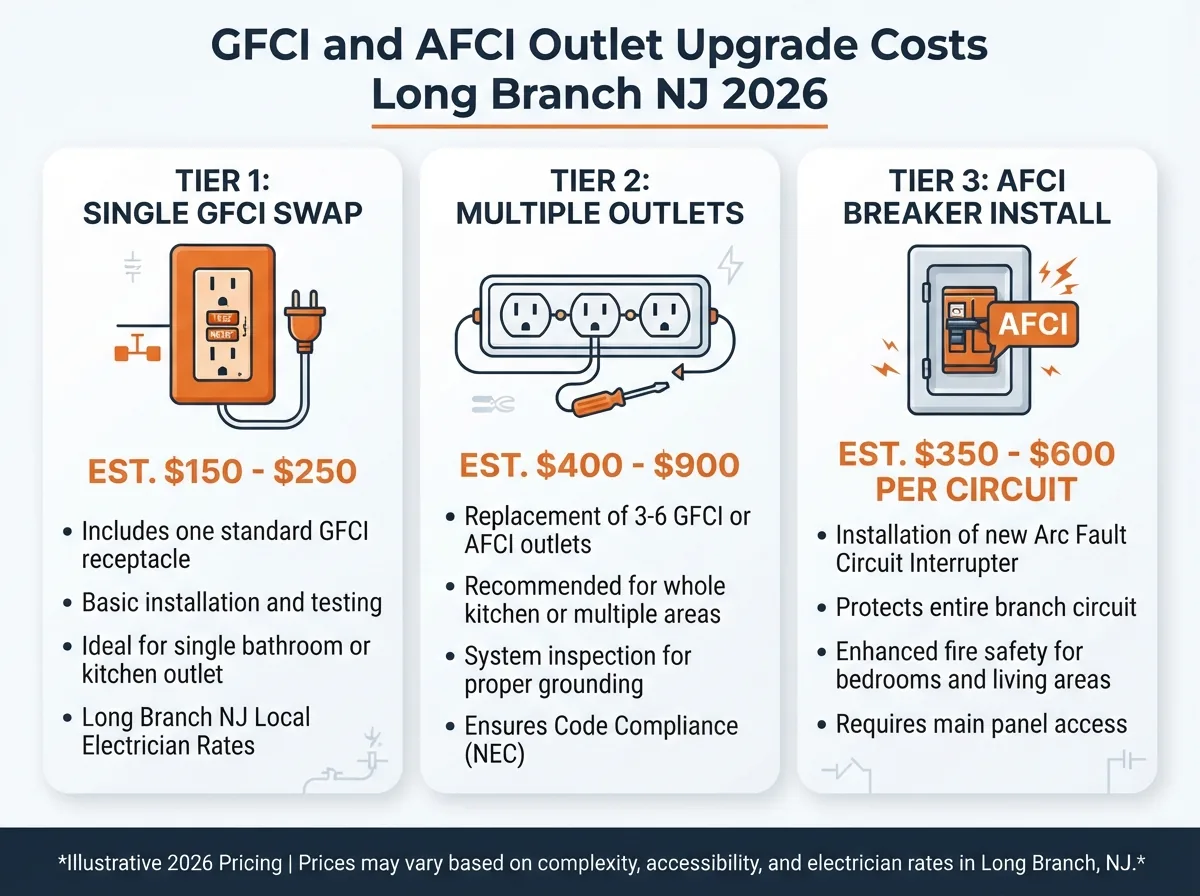
Electrician hourly rates in Monmouth County run $50 to $130 per hour, with most outlet jobs taking 30 minutes to two hours depending on wiring condition behind the wall.
6 Signs You Need an Outlet Upgrade Now
Not every old outlet is dangerous. But these warning signs mean you should stop using the outlet and call a licensed electrician:
1. Outlets feel warm to the touch. Heat at the faceplate or surrounding wall indicates loose connections, overloaded circuits, or failing internal components. Warm outlets are a fire risk — not a minor inconvenience.
2. Buzzing, crackling, or sizzling sounds. Healthy outlets are silent. Any noise from an outlet or switch means arcing inside the box. Turn off the circuit at the breaker and call for service.
3. Visible scorch marks or discoloration. Brown or black marks on the outlet face, wall plate, or surrounding drywall indicate past arcing events. Replace the outlet and inspect the wiring behind it.
4. Plugs fall out easily. Loose receptacles mean worn internal contacts that no longer grip plug blades firmly. The resulting intermittent connection creates heat and arcing.
5. GFCI outlets that will not reset. A GFCI that trips repeatedly or fails to reset after testing has internal damage or a ground fault downstream on the circuit. Both need professional diagnosis.
6. Two-prong outlets in kitchen, bathroom, or outdoor locations. Ungrounded two-prong outlets in wet or moisture-prone areas offer no shock protection. GFCI upgrades are code-required and safety-critical in these locations.
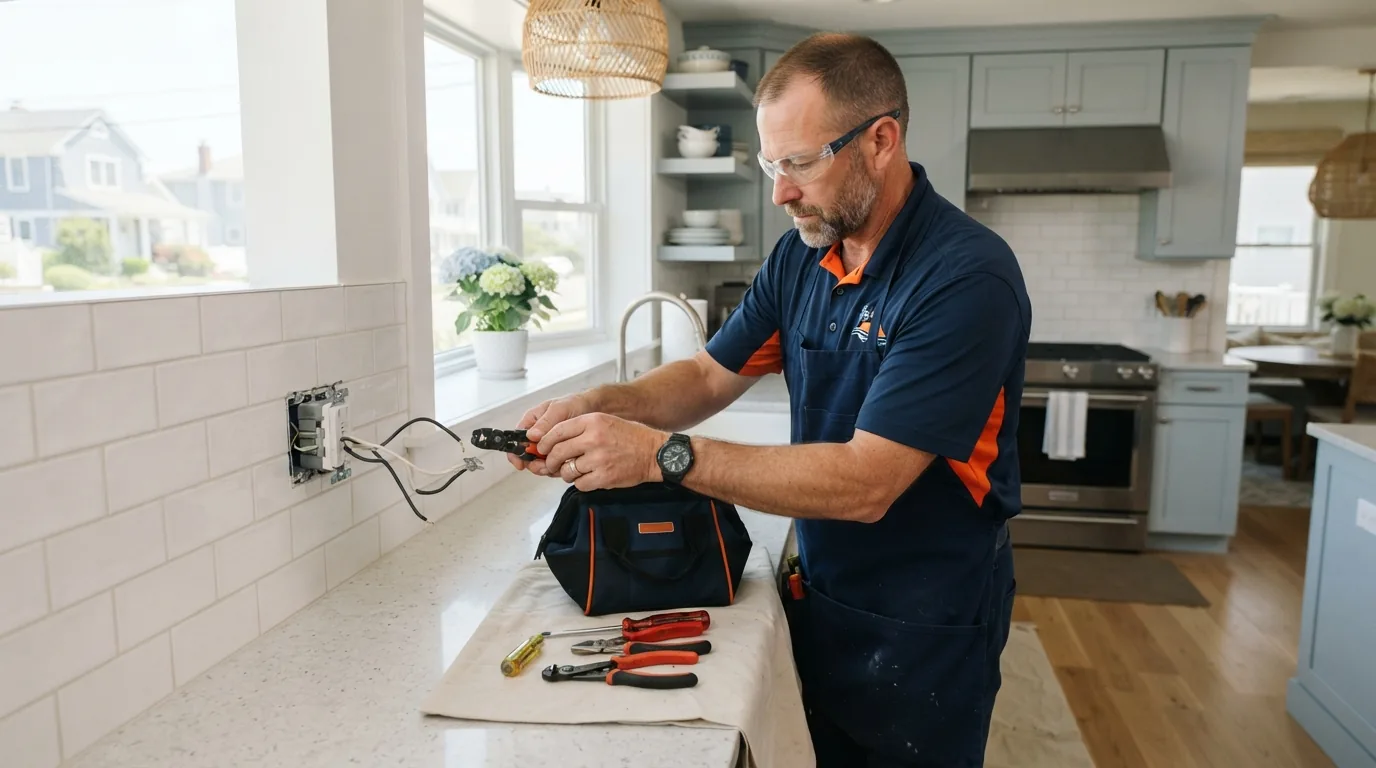
If you notice any of these signs, do not wait for a convenient time. Our electrical services in Long Branch team responds 24/7 for safety-related calls across Monmouth County.
Where Long Branch Homes Most Need Upgrades
Based on more than 15 years of service calls in the area, these are the outlet upgrades we recommend most often:
Kitchen countertops. Older Long Branch homes often have standard outlets above counters where GFCI protection is now code-required. Kitchen remodels are the most common trigger, but safety alone justifies the upgrade even without renovation plans.
Bathroom outlets. Outlets within 6 feet of a sink must be GFCI-protected. Many pre-1980 bathrooms have standard outlets mounted beside the mirror — exactly where water contact risk is highest.
Garage and basement. GFCI protection is required in garages and unfinished basements. Power tools, wet floors, and concrete surfaces create shock hazards that standard outlets do not address.
Outdoor and deck outlets. Shore-area humidity and rain exposure make outdoor GFCI outlets essential. Weather-resistant covers (WR rating) are required for any outlet exposed to the elements.
Bedroom circuits. AFCI breakers on bedroom circuits protect against wiring damage inside walls — common in homes where nails, insulation settling, or rodent activity has compromised wire insulation over decades.
Home offices and charging stations. Modern households draw more power from outlets than homes were designed for. Adding dedicated circuits for home offices, EV chargers, or workshop equipment prevents overloaded circuits that trip breakers or overheat wiring.
Can You Upgrade Outlets Yourself?
Replacing a standard outlet with a GFCI outlet of the same type — same wiring, same box, same circuit — is a reasonable DIY project for someone comfortable turning off breakers and testing with a voltage meter.
Call a licensed electrician when:
- The outlet box contains aluminum wiring (common in 1960s–70s construction)
- You have two-prong ungrounded outlets and need proper grounding
- The circuit breaker trips repeatedly after outlet replacement
- You need new wiring run from the panel to a new location
- AFCI breakers need to be installed in the main panel
- You are unsure whether the existing wiring is safe to reconnect
Aluminum wiring requires special connectors and techniques. Connecting a GFCI outlet to aluminum wire without the proper pigtail method creates a fire hazard. Many Long Branch homes from the 1960s and 1970s have aluminum branch circuit wiring — if yours does, professional installation is the safe path.
Our licensed and insured electricians handle outlet upgrades alongside other work. If you also need plumbing or general home repair tasks during the same visit, we bundle them to save you a second trip.
NJ Electrical Code: What Changed and Why It Matters
New Jersey follows the National Electrical Code (NEC) with state-specific amendments. Recent code cycles expanded GFCI and AFCI requirements significantly:
- GFCI protection now covers all kitchen outlets — not just those within 6 feet of the sink
- AFCI protection expanded to most living areas beyond bedrooms
- Tamper-resistant outlets are required in all new installations where children may be present
- Weather-resistant GFCI is required for all outdoor outlets
You do not need to upgrade every outlet in your home to current code tomorrow. But if you are renovating, selling, or pulling a permit for any electrical work, inspectors will require compliance in the affected areas.
For homeowners preparing to sell in Long Branch’s competitive shore market, pre-listing electrical upgrades prevent inspection surprises that delay closing or force price concessions. A GFCI and AFCI upgrade costs far less than renegotiating a sale after the buyer’s inspector flags outdated outlets.
Smart Upgrades Worth Considering
Beyond safety code compliance, a few outlet upgrades improve daily life:
USB-A and USB-C outlets replace standard receptacles and eliminate bulky charging adapters. Useful in kitchens, bedrooms, and home offices.
Whole-outlet surge protection guards electronics against power surges — relevant in shore areas where storm-related power fluctuations are common.
Smart outlets and switches integrate with home automation systems for remote control of lamps, fans, and appliances. Installation follows the same wiring as standard outlet swaps in most cases.
Dedicated circuits for high-draw appliances — window AC units, space heaters, refrigerators in garages — prevent overloaded shared circuits that trip breakers and degrade outlet contacts.
Discuss your household’s actual usage patterns before upgrading. Not every outlet in the house needs to be GFCI-protected — but every outlet in a wet or moisture-prone location does.
What to Expect During an Outlet Upgrade Visit
A single GFCI outlet swap takes 30 to 60 minutes. A multi-outlet upgrade across a kitchen or bathroom takes two to three hours. Whole-panel AFCI breaker upgrades take a half day.
During the visit, the electrician:
- Turns off power at the breaker and verifies zero voltage with a meter
- Removes the existing outlet and inspects wiring condition in the box
- Installs the new GFCI, AFCI breaker, or standard outlet with proper connections
- Tests GFCI function using the test and reset buttons
- Labels the circuit panel if breakers were changed
- Checks for any other visible issues in nearby outlets on the same circuit
We include a walkthrough of what was done and flag any additional wiring concerns found during the work — loose connections in adjacent boxes, undersized wire gauge, or signs of past overheating.
For seasonal electrical checks bundled with other maintenance, see our home maintenance services page.
Need outlet upgrades, new circuits, or a safety inspection? Any Time Any Job Handyman provides licensed, insured electrical work across Long Branch and Monmouth County. We are available 24/7 — call or text (732) 924-8444 anytime, or use our contact page to schedule service.
Frequently Asked Questions
1. How much does it cost to replace an outlet in Long Branch NJ?
A standard outlet replacement runs $100 to $250 including labor. GFCI outlet replacement costs $130 to $300. Costs increase if the wiring behind the wall needs repair, if grounding must be added, or if the outlet box is damaged and needs replacement.
2. Do I need GFCI outlets in my Long Branch kitchen?
Yes. Current NJ electrical code requires GFCI protection on all kitchen countertop outlets. If your home has standard outlets above the counters — especially in kitchens that have not been updated since the 1990s — upgrading to GFCI is both a code requirement and a safety improvement.
3. What is the difference between a GFCI outlet and a GFCI breaker?
A GFCI outlet protects everything plugged into that outlet and any standard outlets downstream on the same circuit. A GFCI breaker in the panel protects the entire circuit from the breaker box. One GFCI outlet can protect multiple downstream outlets on the same circuit, which is a cost-effective approach for bathrooms and garages with several receptacles.
4. Why does my outlet spark when I plug something in?
A brief spark when plugging in an appliance drawing immediate current is normal. Repeated sparking, bright flashes, or sparking accompanied by a popping sound indicate loose connections, worn receptacle contacts, or damaged wiring. Stop using the outlet and have it inspected. Sparking inside the wall box is a fire hazard.
5. How often should electrical outlets be inspected?
Test GFCI outlets monthly using the test and reset buttons on the faceplate. Have a licensed electrician inspect your panel and outlets every 3 to 5 years, or immediately if you notice warm faceplates, buzzing, burning smells, or frequent breaker trips. Homes over 30 years old with original wiring benefit from a full electrical safety inspection before any major renovation or home sale.