Key Takeaways
- Air conditioning accounts for 19% of residential electricity use in U.S. homes. Reducing that load saves real money.
- Ceiling fans let you raise the thermostat by about 4 degrees without reducing comfort, according to the Department of Energy.
- Blocking direct sun through west- and south-facing windows cuts solar heat gain by up to 65% on the hottest sides of your home.
- NJ summers combine high humidity with heat, which makes moisture management as important as blocking radiant heat.
- Small improvements like attic ventilation, door sweeps, and exhaust fans compound quickly. Each one reduces how hard your AC works, or how long you can go without it.
Keeping your house cool without running AC constantly is possible in a NJ summer, but it takes a layered approach. The ten tips below are ranked from highest impact to lowest, with local context for the shore-area heat and humidity that makes Monmouth County summers feel harder than the temperature alone suggests.
Why NJ Summers Are Particularly Demanding
Heat index, not just air temperature, is the real measure of summer discomfort along the Jersey Shore. Long Branch regularly sees July afternoons where 88 degrees with 70% humidity pushes the heat index above 100. That combination overwhelms a home that is not managing both heat and moisture.
Most generic cooling guides are written for dry climates. Opening every window at night works great in New Mexico. In NJ, nighttime humidity often stays above 60%, so pulling that air inside can make the house feel sticky and warm the next morning. These tips account for that reality.
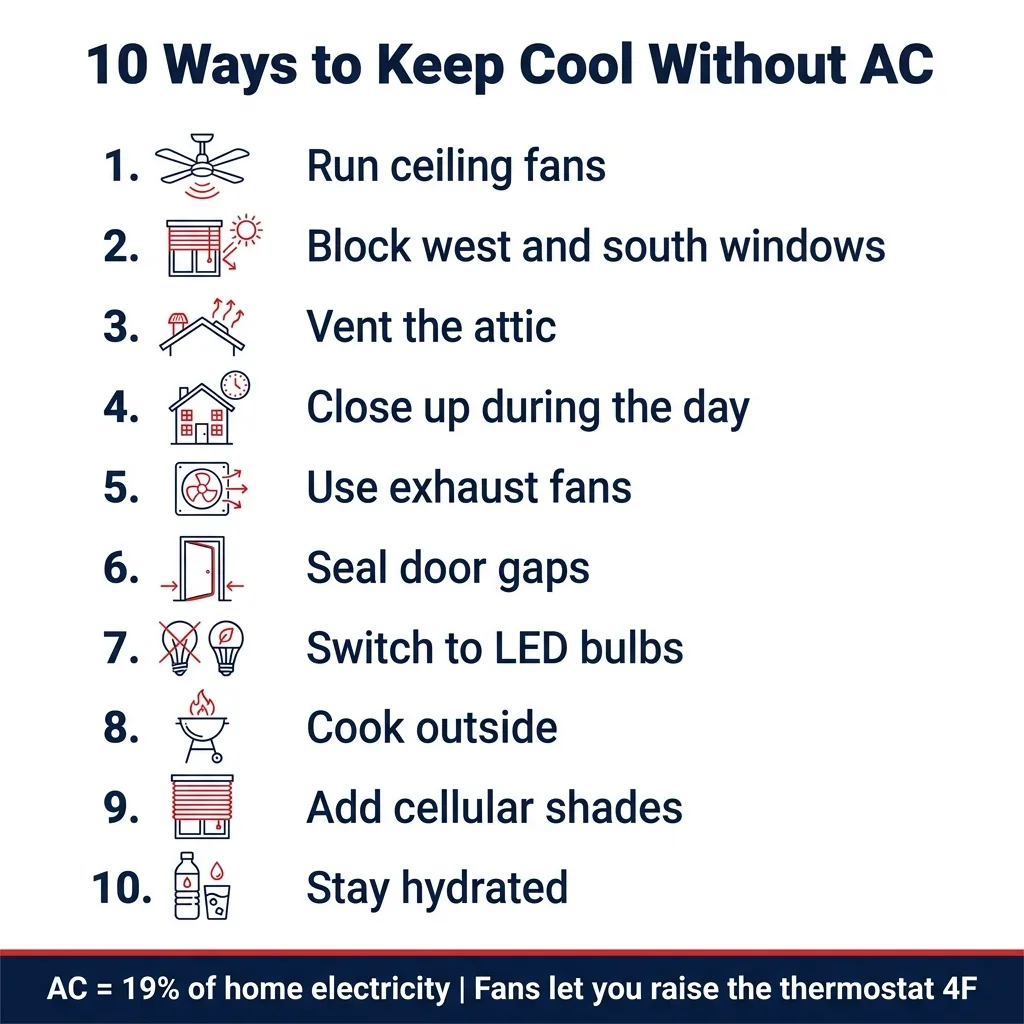
The 10 Tips
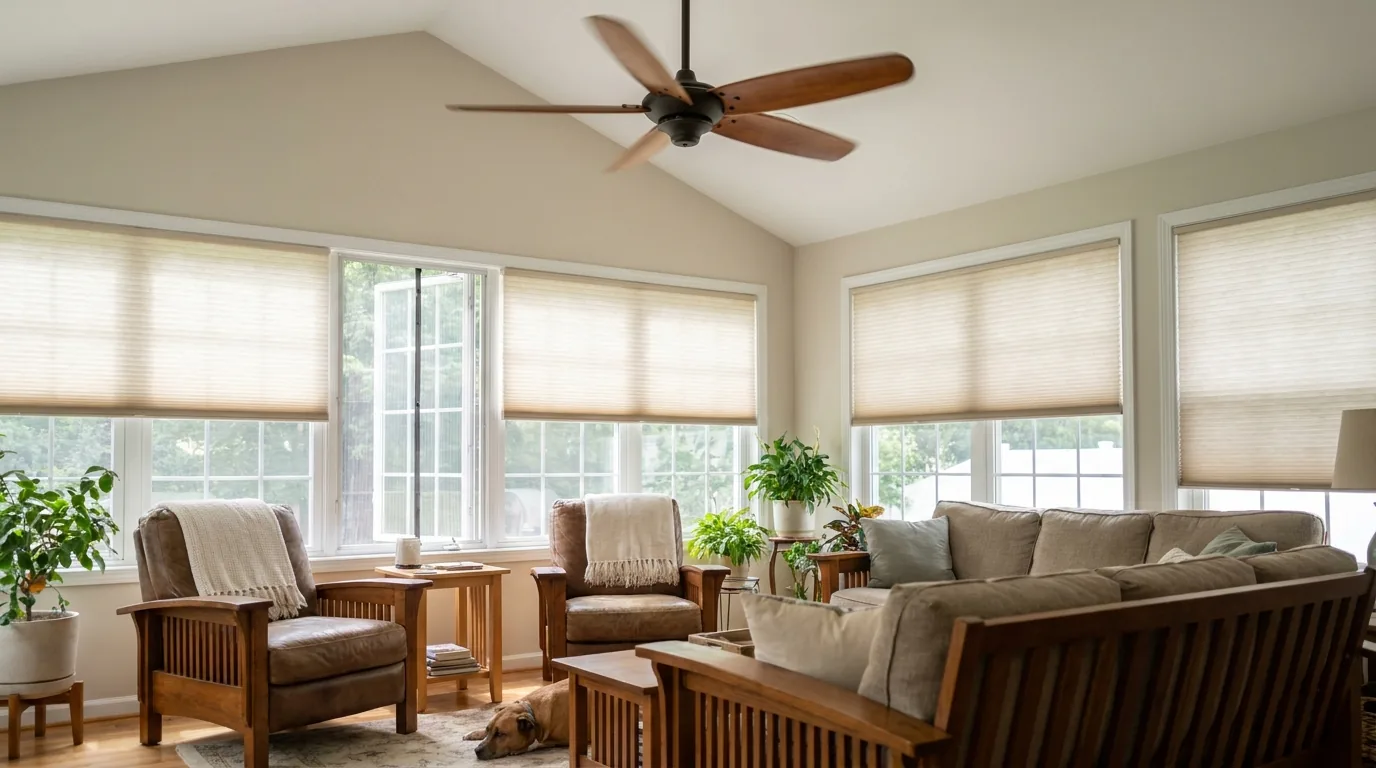
1. Use Ceiling Fans in Every Occupied Room
A ceiling fan does not lower room temperature. What it does is create a wind-chill effect that makes the same temperature feel 3 to 4 degrees cooler. The Department of Energy reports that ceiling fans allow you to raise your thermostat setting by about 4 degrees without any reduction in perceived comfort.
The key: turn ceiling fans off when you leave the room. The fan cools people, not spaces. Running it in an empty room wastes electricity without any benefit.
Make sure the fan rotates counterclockwise in summer (looking up at the blades). This pushes air straight down and creates the cooling draft. Most fans have a direction switch on the motor housing.
2. Block West- and South-Facing Windows During Peak Hours
Radiant solar heat through glass is the single biggest driver of afternoon indoor temperature in NJ homes. Between noon and 5 PM, west- and south-facing windows act like a greenhouse effect on your living spaces.
Cellular shades on the interior can reduce solar heat gain through windows by up to 60%. Exterior awnings do even better: the DOE notes awnings can reduce solar heat gain by up to 65% on south-facing windows and 77% on west-facing windows.
You do not need to invest in awnings to get most of the benefit. A set of white-backed medium-colored drapes can reduce heat gain by 33%. The goal is to intercept the sun before it becomes heat inside your walls.
Older Long Branch homes from the 1950s and 1960s often have single-pane windows and minimal overhangs. Those homes benefit most from window treatments since there is no architectural shading to help.
3. Vent the Attic Properly
An unventilated or poorly ventilated attic can reach 150 degrees on a hot NJ summer afternoon. That heat radiates down through the ceiling into living spaces for hours after the sun goes down.
Proper attic ventilation, specifically a combination of soffit intake vents and ridge or gable exhaust vents, allows hot air to escape rather than build up. A well-ventilated attic runs 10 to 20 degrees cooler than a sealed one, and that difference is felt directly in the rooms below.
If your home has a whole-house attic fan, it can exhaust a full house’s worth of air in just a few minutes during the cooler early evening. Our guide on attic fan installation in NJ explains what the options look like and what they cost in 2026.
4. Use Exhaust Fans Strategically in the Kitchen and Bathrooms
Cooking and showering are the two biggest indoor heat and humidity generators in a home. A gas range or oven can add several degrees to a kitchen in under an hour.
Run the range hood exhaust fan whenever you cook, not just when you see smoke. Run the bathroom exhaust fan for 15 to 20 minutes after every shower. Both vents pull hot, humid air directly out of the house before it diffuses into the rest of the living space.
If your bathroom exhaust fan is more than 10 years old and sounds like a small aircraft, it is worth replacing. A quiet, high-CFM replacement fan is relatively inexpensive and does a noticeably better job of clearing humidity. Our electrical services in Long Branch include exhaust fan replacement.
5. Cross-Ventilate Selectively on Cooler Nights
Natural ventilation works in NJ, but only when conditions cooperate. It is most effective when nighttime temperatures drop below 72 degrees and humidity is below 60%. That combination is not guaranteed at the shore, but it does happen during stretches of early-summer and late-summer weather.
When it does, open lower windows on the shaded side of the house (usually north or east in the evening) and upper windows or vents on the opposite side. Cool air enters low, warms slightly as it rises, and exits high. This cross-ventilation can bring the house down 5 to 8 degrees overnight without running a system.
Close all windows by 8 AM before the outdoor temperature climbs above indoor temperature. Keeping cool air in is as important as pulling it in.
6. Seal Air Leaks Around Doors and Windows
Hot outdoor air infiltrating through gaps around door frames and window sills adds meaningfully to your cooling load, even when windows are closed.
Door sweeps on exterior doors, weatherstripping on door frames, and caulk around window trim are inexpensive fixes that compound across the whole summer. The DOE estimates that properly sealing and insulating a home reduces heating and cooling costs significantly. Air sealing is one of the highest-return improvements available before insulation upgrades.
In older Monmouth County homes, gaps are common: between foundation sill plates, around window AC units, and at the junction of additions with original construction. A systematic walk-through with a lit stick of incense on a breezy day will show you where air is moving.
7. Switch to LED Bulbs and Turn Off Idle Electronics
Incandescent bulbs convert about 90% of their energy to heat, not light. In a room with six incandescent fixtures, you are essentially running a space heater while trying to keep cool.
LED replacements produce the same light output at a fraction of the heat. A room that switched fully to LEDs is measurably cooler during peak heat hours. Computers, televisions, and cable boxes also generate heat continuously when left on or in standby. Unplugging or using a smart power strip on entertainment centers makes a small but real difference during the hottest weeks of a NJ summer.
8. Cook Outside or Use Lower-Heat Methods Indoors
Running an oven for an hour on a 90-degree July day in a NJ shore home is a direct heat addition to the space you are trying to cool. It is also one of the most avoidable sources.
A gas grill, an air fryer, an Instant Pot, or a microwave generates far less indoor heat than a conventional oven. Moving dinner outside during July and August is not just more comfortable; it keeps the kitchen from becoming the hottest room in the house for hours afterward.
9. Add Interior Shading with Reflective Film on Problem Windows
For rooms where window coverings are impractical, or where a west-facing window has no good overhang or awning option, low-emissivity window film is a cost-effective alternative.
Reflective window films reject solar heat gain without significantly reducing visible light. They are applied directly to the interior glass surface and are generally more cost-effective than full window replacement. The material is permanent and more effective than interior shades at stopping heat before it enters the glass.
This is a fix we handle through our general home repair services in Long Branch when a homeowner wants a longer-term solution than curtains.
10. Time High-Heat Tasks to the Coolest Part of the Day
Dishwasher cycles, dryer cycles, and bath time all add heat and humidity to the home. Running these in the early morning or after 8 PM keeps the heat load outside of the peak afternoon hours when the house is already warming from solar gain.
A programmable or smart thermostat helps automate this logic. Our thermostat setup and smart home services in Long Branch include installation and configuration for most brands.
These tips work together. No single one replaces a cooling system on a 95-degree August afternoon in Monmouth County. But layering four or five of them reduces how hard your AC has to run, how long you can wait before turning it on, and how much your July electric bill climbs. Any Time Any Job Handyman handles the physical fixes: fan installation, air sealing, and exhaust upgrades. Call or text (732) 924-8444 to schedule a free estimate. We’re available 24/7.
Frequently Asked Questions
1. How do I cool down my house without AC in a NJ summer?
The most effective combination is ceiling fans in every occupied room (raise the thermostat 4 degrees), blocking west- and south-facing windows from 12 to 5 PM, and venting the attic properly. Add selective nighttime cross-ventilation when humidity is below 60%, and eliminate indoor heat sources like incandescent bulbs and oven cooking during peak afternoon hours. Each step compounds.
2. How cool should my house be if it is 100 degrees outside?
Most people are comfortable at indoor temperatures between 72 and 76 degrees. If outdoor temps hit 100 in NJ, maintaining indoor temps below 80 degrees without AC requires a combination of shading, ventilation timing, and reduced indoor heat generation. A whole-house attic fan exhausting in the early evening can bring indoor temps down 8 to 10 degrees before the next day’s heat builds.
3. How do I keep my house cool in extreme NJ heat?
Start with your windows. Close them by 8 AM and block direct sun on the south and west sides. Run ceiling fans in occupied rooms. Check attic ventilation. Avoid using the oven after noon. Run exhaust fans after cooking and showering. These steps will not replace AC on a true heat wave day, but they cut the load substantially and keep the house cooler for longer after the sun goes down.