
Key Takeaways
- A pump that never stops is usually a stuck float, a failed check valve, or a high water table after heavy rain.
- A pump that will not start is usually power (a tripped GFCI or breaker), a stuck float, or a burned-out motor.
- Fixr puts typical sump pump repair at $150–$500, with an average near $300.
- Replacing the pump runs about $700–$1,600 on Fixr’s repair page. A new install from scratch averages about $1,400.
- Test your pump before a storm, not during one.
A sump pump that runs nonstop or will not turn on is telling you something specific. Most of the time the cause is the float, the check valve, the power supply, or the pit itself. A few checks will narrow it down in ten minutes, and tell you whether you need a repair, a new pump, or just patience after a storm.
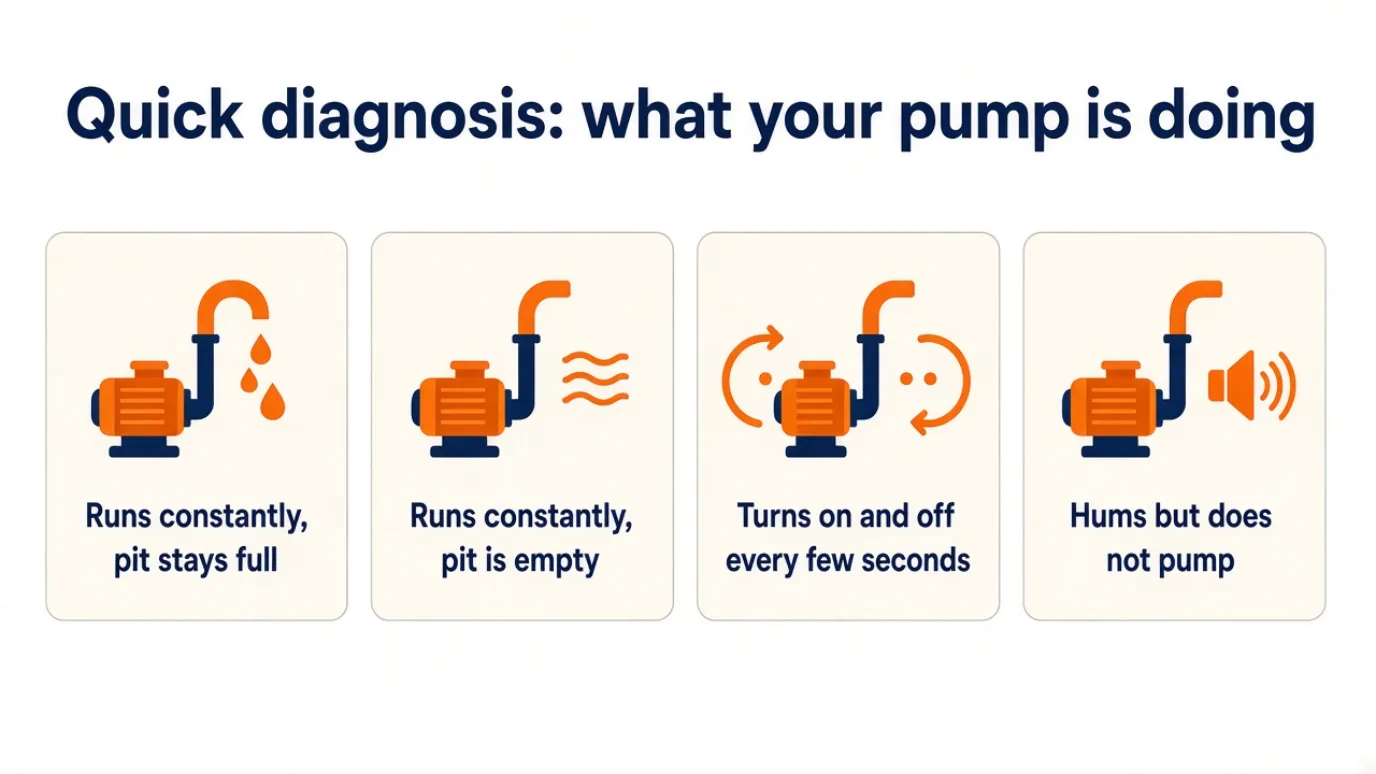
Quick diagnosis: what your pump is doing
Match what you see to the likely cause.
| Symptom | Most likely cause | First check |
|---|---|---|
| Runs constantly, pit stays full | Pump too small, clogged intake, or high groundwater | Watch the water level while it runs |
| Runs constantly, pit is empty | Float stuck in the “on” position | Lift and drop the float gently |
| Turns on and off every few seconds | Bad check valve or float set too low | Listen for water rushing back after shutoff |
| Hums but does not pump | Jammed impeller or clogged intake | Unplug, then check the screen |
| Will not turn on at all | Tripped GFCI or breaker, stuck float, dead motor | Reset the outlet, then lift the float |
| Rotten egg smell | Dry pit or bacteria in standing water | Add water, then clean the pit |
What it means for your home: Unplug the pump before you reach into the pit. Many basement outlets are GFCI protected, and a tripped outlet is the most common “dead pump” we see.
Why a sump pump runs nonstop
Stuck float. The float switch rises with the water and turns the pump on. If it catches on the pit wall or the power cord, it stays up. The pump keeps running even with an empty pit. That burns out motors fast.
Failed check valve. The check valve stops pumped water from falling back into the pit. When it fails, water drains back, the float rises again, and the pump cycles over and over. You will often hear a rush of water right after the pump shuts off.
High water table. After days of heavy rain, groundwater can enter the pit as fast as the pump removes it. In that case, constant running is normal. The question is whether the pump can keep up.
Undersized or worn pump. An older pump loses capacity. If it barely keeps up in normal rain, it will fall behind in a storm.
Frozen or blocked discharge line. In winter, an outdoor discharge line can freeze. The pump runs but water has nowhere to go. Check where the line exits the house.
Why a sump pump will not turn on
No power. Check the GFCI outlet and the breaker. If the GFCI keeps tripping, the pump may have a ground fault. Do not keep resetting it. Call for service.
Stuck float. A float trapped in the down position never tells the pump to start.
Burned-out motor. Pumps that ran dry or ran nonstop for a long time often fail here. If the pump hums but does not move water, the impeller may be jammed with debris.
Debris in the pit. Gravel, silt, and lost items can block the intake or jam the float. A pit with no cover collects more of it.

Safe checks you can do yourself
- Unplug the pump.
- Reset the GFCI and check the breaker.
- Clear debris from around the float and the intake screen.
- Plug it back in. Pour a bucket of water into the pit slowly.
- Watch: the float should rise, the pump should start, and it should shut off once the pit drains.
- Listen for water rushing back after shutoff. That points to the check valve.
- Outside, make sure the discharge line is clear and drains away from the house.
Anytime advice: if the pump starts but the pit refills right away with clear water during dry weather, check the check valve and the discharge line before buying a new pump.
Repair or replace?
| Situation | Usually the better move |
|---|---|
| Stuck float, pump otherwise fine | Repair or adjust |
| Bad check valve | Replace the valve |
| Motor hums, will not pump, older unit | Replace the pump |
| Pump keeps up only in light rain | Upgrade size or add a backup |
| Pit smells of rotten eggs | Clean the pit and check the cover |
Fixr’s repair page puts typical sump pump repairs at $150–$500. A full pump replacement runs about $700–$1,600. A rotten egg odor repair is about $100–$250, and an inspection runs $50–$100.
If your home never had a pump and you want one, a new installation averages about $1,400, with a typical range of $800–$2,000.
Before the next storm
Long Branch basements see water after nor’easters and long rain events. A few habits help:
- Test the pump every season with a bucket of water.
- Keep the pit covered and clear.
- Make sure downspouts drain well away from the foundation.
- Consider a battery backup if you lose power in storms.
Ready.gov’s flood guidance also suggests keeping important items off the basement floor and knowing how to shut off power safely if water rises. If water does get in, dry the area within 24–48 hours to limit mold growth.
For more on keeping water out, read our guide to DIY basement waterproofing vs hiring a pro. Our hurricane prep checklist covers the sump pump step too.
When to call a plumber
Call when the GFCI keeps tripping, the pump hums but will not move water, the check valve needs replacing, or the pump cannot keep up in rain. Do not wait for a storm to find out.
We repair, replace, and add backup pumps for homes in Long Branch and around Monmouth County. See our sump pump installation service, or call (732) 924-8444 to have someone test your pump this week. If water already reached finished walls, our drywall repair team can follow up once the area is dry.
If water already got in, read our storm and water damage insurance claims guide or see our plumbing service.
Frequently Asked Questions
Is it normal for a sump pump to run constantly after heavy rain?
Yes, for a while. A high water table can feed the pit nonstop after storms. If it still runs constantly days after the rain stops, check the float and the check valve.
Why does my sump pump turn on every few minutes when it is not raining?
A failed check valve lets pumped water drain back into the pit. A high water table or a leaking pipe nearby can also feed the pit.
How do I know if my sump pump is broken?
Pour water into the pit. If the float rises and the pump does not start, or the pump hums without moving water, it needs service.
How much does sump pump repair cost?
Fixr reports a typical range of $150–$500. Replacement runs about $700–$1,600.
How often should I test my sump pump?
Every season, and before any big storm forecast.