A damp basement is one of the most common problems in older Monmouth County homes. Between clay-heavy soil, a high water table near the Jersey Shore, and homes built decades before modern drainage codes, water finds its way in more often than homeowners expect.
The question isn’t just “how do I waterproof my basement” — it’s which fixes are safe to handle yourself and which ones need a professional. This guide walks through both sides honestly so that you can decide with confidence.
In this article:
- What basement waterproofing actually involves
- DIY-appropriate tasks vs. jobs that need a pro
- Why some basement issues are bigger than they look
- What professional waterproofing typically costs
- FAQs on basement waterproofing and moisture control
What “Basement Waterproofing” Actually Means?
Basement waterproofing isn’t one job — it’s a range of fixes depending on where water is coming from and how much of it there is. Some homes just need better moisture control (humidity, condensation). Others have active water intrusion through cracks, walls, or the floor.
Common causes include poor exterior grading, clogged or damaged gutters, missing downspout extensions, cracked foundation walls, and a high water table pushing moisture through the slab. The right fix depends entirely on the cause, which is why an accurate diagnosis matters more than jumping straight to a product.
Key takeaway: Not every damp basement needs the same fix. Diagnosing where the water is coming from — grading, gutters, cracks, or groundwater — determines whether it’s a DIY job or a professional one.
What You Can Reasonably DIY
Some basement moisture problems are genuinely manageable for a hands-on homeowner, especially if you catch them early:
- Extending downspouts so water discharges well away from the foundation
- Regrading soil near the foundation so it slopes away from the house
- Cleaning gutters to prevent overflow that saturates the soil next to your walls
- Sealing hairline cracks in concrete with hydraulic cement or masonry sealant
- Applying waterproof paint or sealant to interior basement walls for minor dampness
- Running a dehumidifier to manage humidity and prevent condensation-related moisture
These fixes address the easier, more common causes of a damp (not flooded) basement, and they’re a reasonable weekend project for most homeowners.
Key takeaway: Grading, gutters, downspouts, and minor crack sealing are realistic DIY projects. They also happen to be the most common causes of basement dampness, so tackling them first often solves the problem.
What Should Go to a Professional
Once water is actively entering the basement, not just humidity, but visible seepage, standing water, or recurring flooding, the job typically requires equipment and expertise beyond a DIY fix:
- Interior drainage systems (French drains along the interior perimeter)
- Exterior waterproofing involving excavation down to the foundation footing
- Sump pump installation and backup power setup
- Foundation crack injection for structural cracks (not hairline surface cracks)
- Major grading or drainage regrading that involves moving a significant soil volume
- Any water intrusion tied to a cracked or shifting foundation
These jobs require correctly diagnosing the water table, foundation condition, and drainage path; get it wrong, and you can spend money without solving the underlying problem or trap moisture in a way that makes things worse.
Key takeaway: Interior drainage systems, exterior excavation waterproofing, sump pumps, and foundation crack injection are professional jobs. They require diagnostic work and equipment that go well beyond a DIY fix.
DIY vs. Professional: Side-by-Side Comparison
| Task | DIY-Appropriate? | Typical Cost (Pro) | Risk Level if Done Wrong |
|---|---|---|---|
| Downspout extension | Yes | $50–$150 (materials) | Low |
| Regrading near the foundation | Often, for minor slopes | $500–$1,500 | Low–Moderate |
| Hairline crack sealing | Yes, for surface cracks only | $250–$800 | Moderate |
| Interior waterproof paint/sealant | Yes, for minor dampness | ~$3,000 (full interior system) | Moderate |
| Sump pump installation | No | $800–$3,000 | High |
| Interior French drain system | No | ~$3,000 (interior systems average) | High |
| Exterior excavation waterproofing | No | ~$7,000 (extensive exterior systems) | High |
| Foundation crack injection (structural) | No | Varies by extent | High |
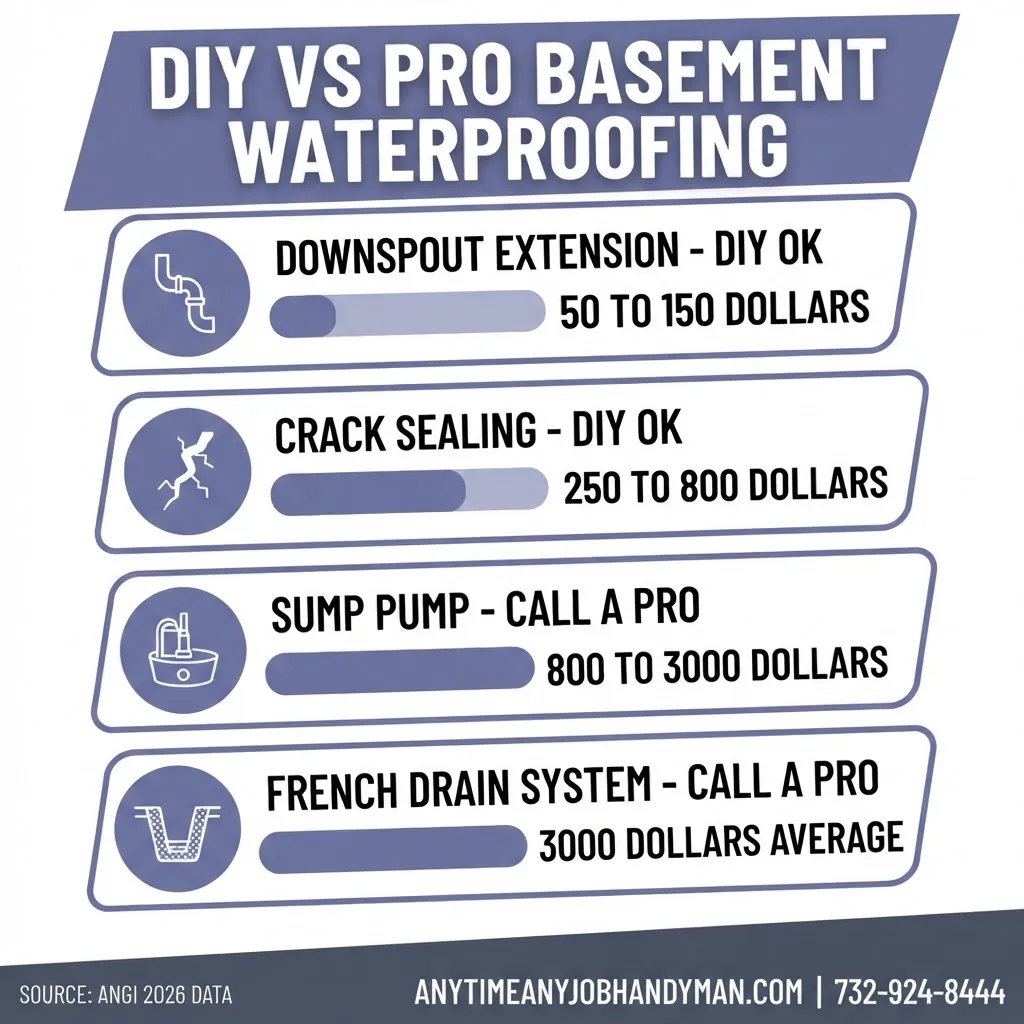
Overall, professional basement waterproofing ranges from about $1,000 to $30,000, with an average around $5,500, or roughly $3 to $10 per square foot, depending on scope. Interior systems tend to run cheaper — around $3,000 on average — since they don’t require excavation, while exterior systems average closer to $7,000 because of the digging and backfilling involved (Angi, Basement Waterproofing Cost, 2026). Sump pump installation alone averages about $1,100, ranging from $800 to $3,000 depending on pump type and complexity (Angi, Sump Pump Installation Cost, 2026).
Key takeaway: Interior waterproofing systems average around $3,000; exterior excavation systems average around $7,000. The difference comes down to labor — digging around a foundation costs far more than working from inside.
Why Waiting Costs More Than Fixing It Early
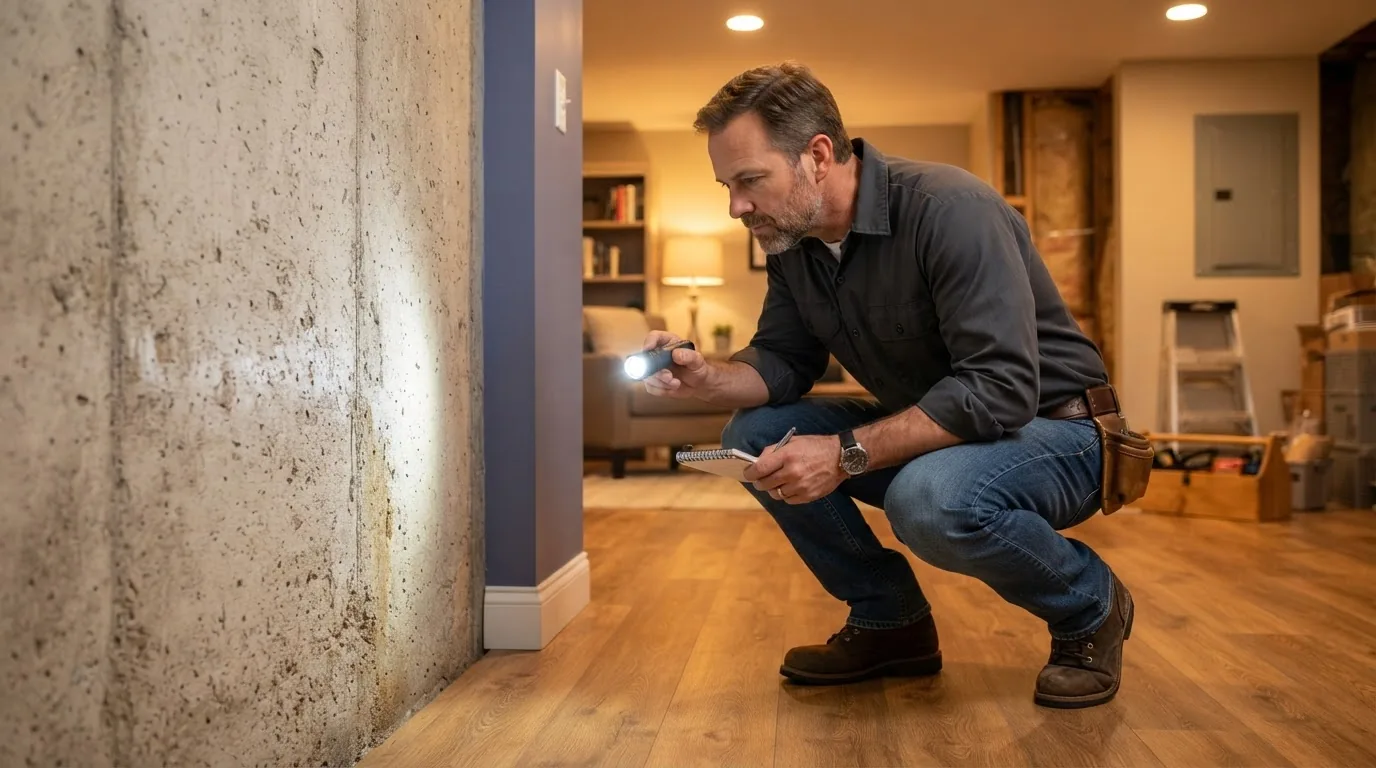
The EPA is direct about this: moisture problems that aren’t addressed quickly can lead to mold growth, and mold “damages what it grows on” the longer it’s left untreated. The agency recommends drying wet materials and fixing leaks as soon as possible, and it specifically advises bringing in a professional once mold covers more than about 10 square feet, when there’s significant water damage, or when the HVAC system may be contaminated (EPA, Mold Cleanup in Your Home).
HUD’s healthy homes guidance puts it even more simply: “the key to mold control is moisture control.” Basements and crawl spaces are named specifically as common trouble spots because they hold moisture longer than other parts of a house (HUD, Help Yourself to a Healthy Home).
This is the real cost of ignoring a damp basement — it’s rarely just about water. Left alone, moisture problems can affect indoor air quality, damage stored belongings, and undermine framing and finished materials over time. If your basement is already finished or you’re planning to finish it, our flooring installation cost guide is a useful next read once the moisture issue is resolved.
Key takeaway: The EPA recommends calling a professional once mold covers more than 10 square feet or water damage is significant. Waiting on a damp basement rarely makes the problem smaller.
How to Decide: DIY or Call a Pro
Ask yourself these questions:
- Is it damp air or standing water? Damp air — try a dehumidifier and check your gutters/grading first. Standing water — call a pro.
- Is the crack a hairline or structural? Hairline surface cracks are DIY-sealable. Wide, shifting, or stair-step cracks need a foundation assessment.
- Does it happen after every heavy rain? Recurring water intrusion (not just one bad storm) usually points to a drainage system that needs a pro.
- Have you already tried the easy fixes? If you’ve extended downspouts, regraded, and cleaned gutters, and it’s still wet, the cause is likely below-grade and needs professional drainage work.
Older homes throughout Long Branch and Monmouth County were often built before modern foundation drainage standards, which is part of why basement moisture is such a common call for us. If you’ve inspected the easy stuff and water is still getting in, it’s time for a proper assessment — our home repair services in Long Branch, NJ team handles both diagnosis and the drainage work itself.
Key takeaway: If you’ve already fixed grading, gutters, and downspouts and the basement is still wet, the problem is likely below-grade and needs a professional drainage assessment.
FAQs
1. Can I waterproof my basement myself?
Partially. Extending downspouts, regrading soil, sealing hairline cracks, and applying interior waterproof paint are reasonable DIY projects. Sump pumps, French drains, and exterior excavation waterproofing require professional equipment and expertise.
2. How much does professional basement waterproofing cost?
Professional waterproofing typically ranges from $1,000 to $30,000, averaging around $5,500, or $3 to $10 per square foot. Interior systems average around $3,000; exterior systems average around $7,000 (Angi, 2026).
3. Is waterproofing paint enough to fix a wet basement?
It depends on the cause. Waterproofing paint can help with minor dampness and condensation, but it won’t stop active water intrusion from a crack, a high water table, or poor exterior drainage. Those causes need to be addressed at the source.
4. How do I know if my basement needs a sump pump?
If you experience recurring standing water after heavy rain, or your home sits in a low-lying area with a high water table, a sump pump is usually part of the right solution. A professional assessment can confirm whether your situation needs one.
Any Time Any Job Handyman diagnoses and repairs basement moisture problems throughout Long Branch and all of Monmouth County — from grading and gutter fixes to drainage and sump pump work. We’re available 24/7, 365 days a year, so a wet basement doesn’t have to wait.
Not sure if it’s a DIY fix or not? Explore our home maintenance services or call or text (732) 924-8444 for a free quote in 30 minutes.