Key Takeaways
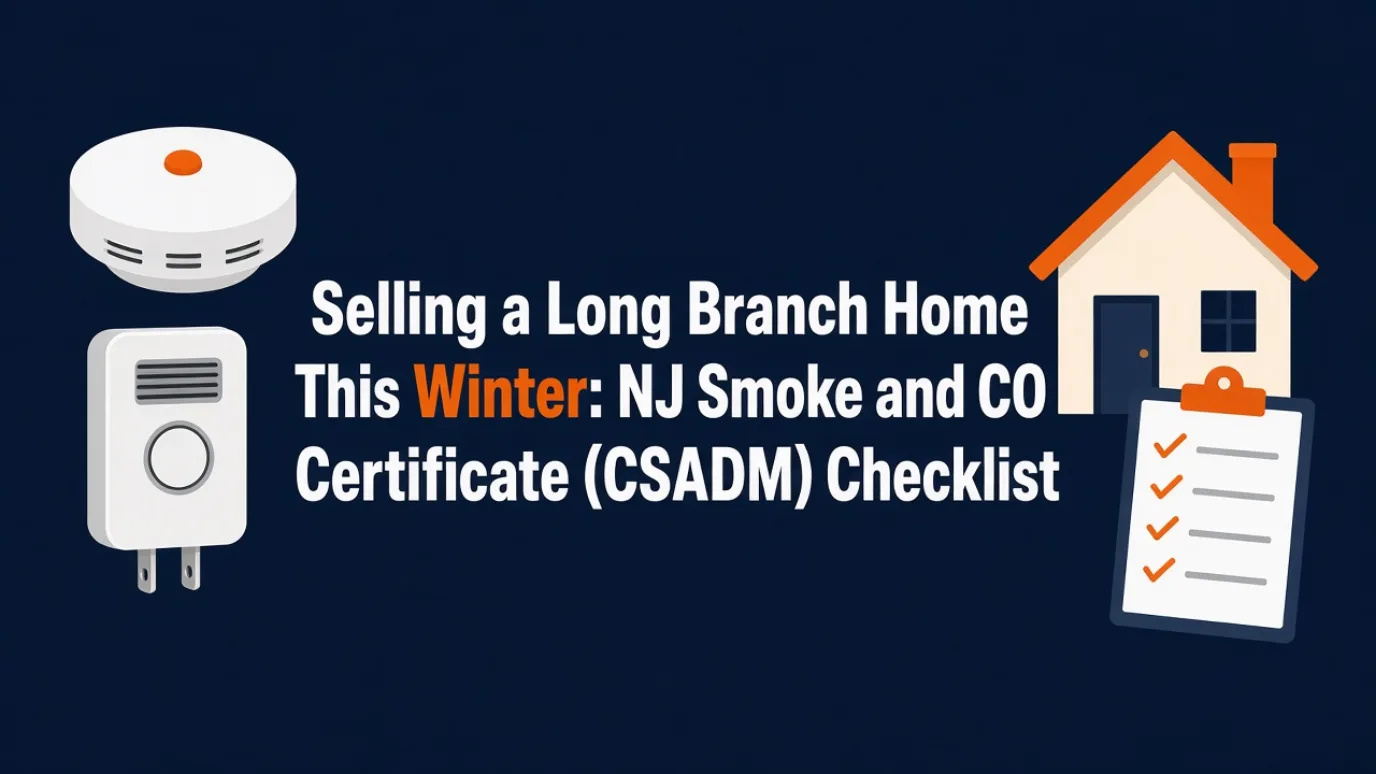
- New Jersey requires a smoke and carbon monoxide alarm certificate before a one- or two-family home is sold or leased. Many people still call it the CSADM.
- The certificate is not transferable, and if the sale does not happen within six months, you need a new application.
- Smoke alarms go on each level and outside each sleeping area. Battery-only alarms must be the 10-year sealed type.
- CO alarms are required near sleeping areas unless the home has no fuel-burning appliance and no attached garage.
- Since February 3, 2025, a portable fire extinguisher is no longer required for the certificate. Homes with a generator, solar, or battery storage need a new warning label.
If you are selling a Long Branch home this winter, book the smoke and CO inspection early and walk the house with this checklist first. Most failed inspections come down to a missing alarm outside a bedroom, an old battery alarm, or a hardwired alarm that was swapped for a plug-in. Those are easy to fix before the inspector arrives.
What the certificate is
The state calls it a Certificate of Smoke Alarm, Carbon Monoxide Alarm and Portable Fire Extinguisher Compliance. You will see it shortened to CSADM, CSACMAPFEC, or “the smoke cert.” The rule is N.J.A.C. 5:70-2.3. It applies before a one- or two-family or attached single-family home is sold, leased, or changes occupancy.
The local fire official or code office handles the inspection. Where no local office does it, the state Division of Fire Safety issues the certificate through its online application portal. Call your town’s fire prevention office to confirm who inspects your address and what the fee is.
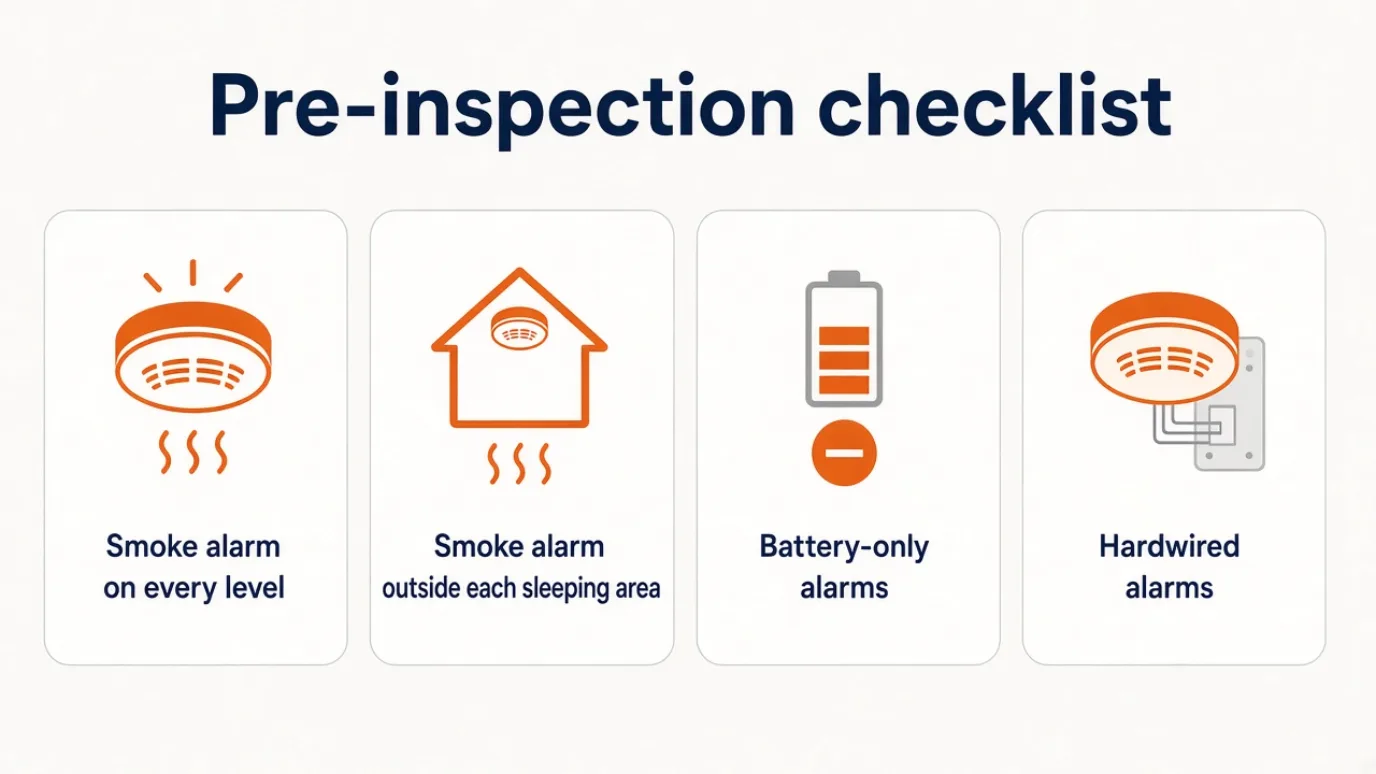
Pre-inspection checklist
| Item | What the inspector looks for | Quick fix |
|---|---|---|
| Smoke alarm on every level | Including the basement | Add a 10-year sealed alarm |
| Smoke alarm outside each sleeping area | Hallway near bedrooms | Add one per sleeping area |
| Battery-only alarms | Must be 10-year sealed units | Replace older 9-volt alarms |
| Hardwired alarms | Must stay hardwired and working | Replace with hardwired units |
| CO alarm near sleeping areas | If any gas, oil, or wood appliance, or attached garage | Add a UL 2034 listed CO alarm |
| Secondary power label | If generator, solar, or battery storage | Install a printed warning label |
| Fire extinguisher | No longer required since Feb 3, 2025 | None needed |
What it means for your home: Press the test button on every alarm the week before inspection. Then check the date on the back. Most alarms have a 10-year life, and an expired unit can fail even if it beeps.
Where smoke alarms must go
The state rule requires smoke alarms on each level of the home and outside each separate sleeping area. Battery-powered alarms must be the 10-year sealed type, listed to UL 217.
Older rules depend on when the home was built. Toms River’s 2025 resale guide gives a clear example of how inspectors apply them:
- Homes built before 1977 need 10-year sealed battery alarms on each level, including the basement.
- Homes built from 1977 to early 1983 need hardwired alarms on sleeping levels and the basement.
- Homes built from 1983 to April 1993 need interconnected hardwired alarms with battery backup on every level.
- Homes built from May 1993 on also need interconnected hardwired alarms inside every bedroom.
Those breakpoints come from Toms River’s resale requirements. Long Branch inspectors follow the same state code, but confirm the details for your home with the local office.
Anytime advice: never replace a hardwired alarm with a battery unit. The rule says hardwired alarms installed with the original construction must stay hardwired. That is one of the most common reasons we see for a re-inspection.
Carbon monoxide alarms
CO alarms are required in homes with any fuel-burning device or an attached garage. That covers gas or oil heat, a gas stove, a gas dryer, a fireplace, and a gas water heater. Most Long Branch homes have at least one.
Install the CO alarm in the immediate vicinity of the sleeping areas. Battery, plug-in, and hardwired types are all allowed if they are UL 2034 listed.
What changed in 2025
Two changes matter to winter sellers.
Fire extinguishers dropped. As of February 3, 2025, a portable extinguisher is no longer required to get the certificate. You may still want one in the kitchen, but it is not an inspection item.
Secondary power label added. If your home has a permanent generator, solar panels, or battery storage, you need a printed label reading “CAUTION: MULTIPLE SOURCES OF POWER” or similar, within 18 inches of the main panel and the meter. Handwritten labels do not count.
Timing your inspection
Inspection calendars fill up in busy months. Toms River asks sellers to apply at least three weeks before closing. Give yourself at least that long in Long Branch too.
Remember that the certificate lasts six months. If your listing sits through the winter and closing slips, you may need a new one.
Winter adds one more wrinkle. Heating systems run hard, and buyers’ inspectors check them. Our heating bill guide for Long Branch covers quick fixes worth doing before showings.
Other repairs worth doing before you list
The smoke cert is only one part of the sale. Buyers’ home inspectors also flag:
- Missing GFCI outlets in kitchens and baths
- Leaky faucets and running toilets
- Loose railings and sticking doors
- Peeling paint and water stains
Our pre-sale upgrades guide and outlet upgrade guide cover the most common items.
Get it done in one visit
We install and test smoke and CO alarms, replace expired units, and match hardwired alarms so you pass the first time. We can also knock out the small items a buyer’s inspector will flag. See our electrical services or call (732) 924-8444 to book a pre-inspection walk-through. For other small fixes, our home repair service covers the rest of the punch list.
Frequently Asked Questions
Do I need a smoke and CO certificate to sell a house in NJ?
Yes. N.J.A.C. 5:70-2.3 requires one before a one- or two-family home is sold or leased.
How long is the NJ smoke certificate valid?
If the sale or lease does not happen within six months, a new application is needed. The certificate is not transferable.
Do I still need a fire extinguisher for the NJ smoke cert?
No. Since February 3, 2025, an extinguisher is no longer required for the certificate.
Can I use 9-volt battery smoke alarms?
No. Battery-only smoke alarms must be 10-year sealed units listed to UL 217.
Where do CO alarms go?
In the immediate vicinity of the sleeping areas, in any home with a fuel-burning appliance or an attached garage.