Key Takeaways
- Replace a water shut-off valve when it will not turn, will not fully stop the water, or drips at the stem or handle.
- Old multi-turn gate valves are the usual problem. A quarter-turn ball valve is the standard upgrade for a main shut-off.
- Angi puts main shut-off valve replacement at $375 to $600, with a $500 national average.
- Location drives the price. A valve with basement access runs $180 to $220. A buried one can reach $1,000.
- Test your valves before winter. A frozen pipe is the worst time to find out the main will not close.
Water shut-off valve replacement makes sense when a valve is seized, leaks at the stem, or no longer stops the flow. The main valve matters most, because it is the one you need in an emergency. Here is how to tell if yours is due, and what the job involves.
Signs your shut-off valve needs replacing
Most valves give warning before they fail. Check every valve in the house once a year.
- The handle will not turn. Mineral buildup locks gate valves in place after years of sitting open.
- It turns but the water keeps running. The gate or washer inside is worn and no longer seals.
- It drips at the stem. The packing nut may just need snugging. If tightening does not stop it, plan on a new valve.
- Green or white crust on the body. Corrosion on brass and copper is a sign the valve and fittings are aging.
- The handle snapped off. Never use pliers on a stuck valve. That is how stems break.
Anytime advice: open and close each fixture valve under your sinks and toilets twice a year. Valves that get exercised keep working. Valves left alone for ten years seize.
Main valve vs fixture valves
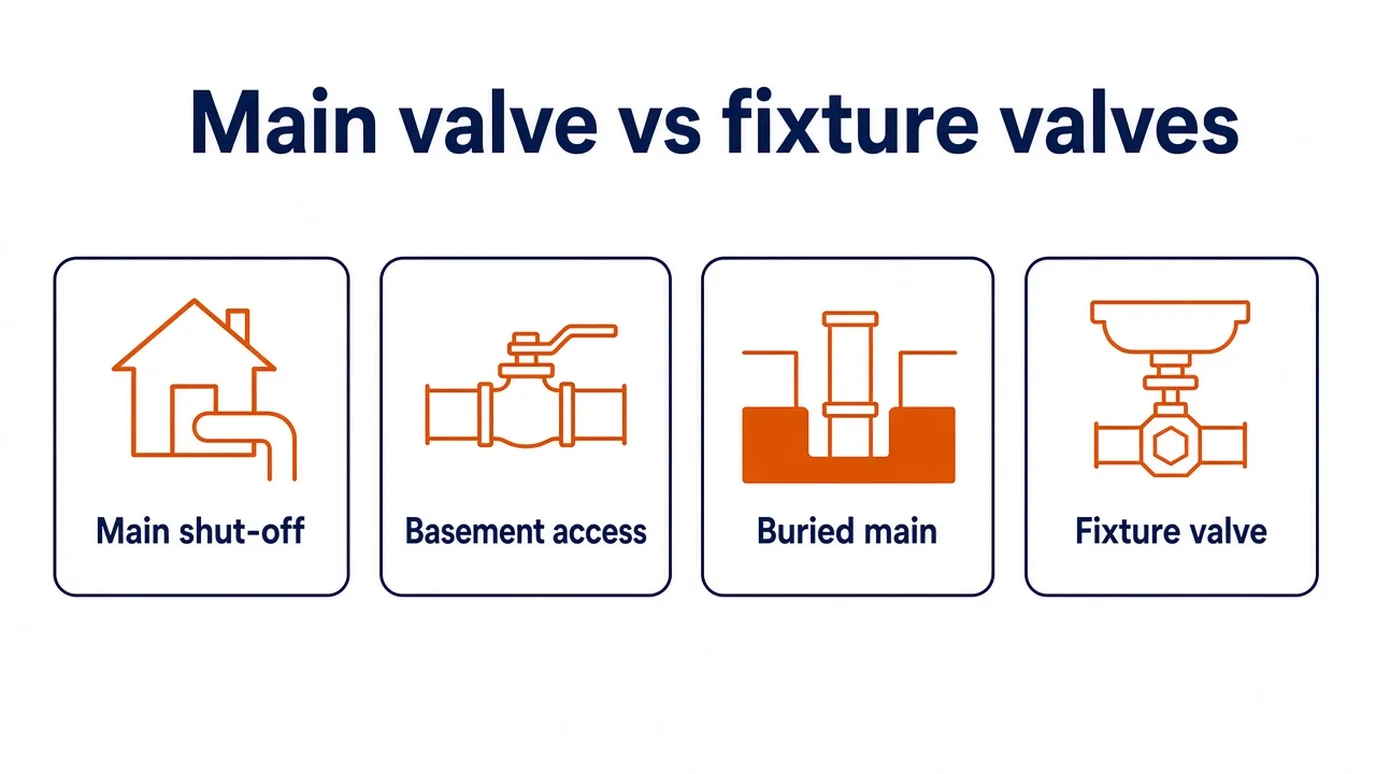
There are two kinds of shut-offs in most homes. They fail for the same reasons, but the jobs are very different.
| Valve | Where it is | Why it matters | National cost range |
|---|---|---|---|
| Main shut-off | Where the water line enters, often basement or utility room | Stops water to the whole house | $375 to $600 |
| Main valve, basement access | Open, easy to reach | Fastest main replacement | $180 to $220 |
| Main valve, buried deep | Underground or in a pit | Digging and cold weather add time | $240 to $1,000 |
| Fixture valve (part) | Under sinks, behind toilets | Lets you work on one fixture | $50 to $150 |
What it means for your home: if your main valve is a round wheel handle, it is likely an older gate valve. A lever handle that turns a quarter turn is a ball valve, which is what most pros install today.
Gate valve vs ball valve
A gate valve lowers a metal gate across the pipe with several turns of a wheel. Over time, scale builds up and the gate sticks open or never seals tight.
A ball valve uses a ball with a hole through it. A quarter turn of the lever opens or closes it. Angi notes ball valves are ideal as a quick-operating main water shut-off. You can also see at a glance whether it is open or closed.
Anytime advice: if you are replacing the main, ask for a full-port ball valve sized to your line. A smaller valve can cut water pressure at the fixtures.
Before winter in Long Branch
Freezing pipes are the most common reason people suddenly need their main shut-off. Long Branch gets hard freezes most winters, and many older shore homes have supply lines in crawl spaces or along outside walls.
If a pipe bursts, every minute the water runs adds to the damage. The EPA advises drying wet materials within 24 to 48 hours to prevent mold, and that clock starts the moment water hits the floor. That is why we suggest testing the main valve in November, while there is no emergency. Our guide on what to do if pipes freeze in Long Branch covers the first steps.
What it means for your home: make sure everyone in the house knows where the main valve is. Hang a tag on it.
How the job works
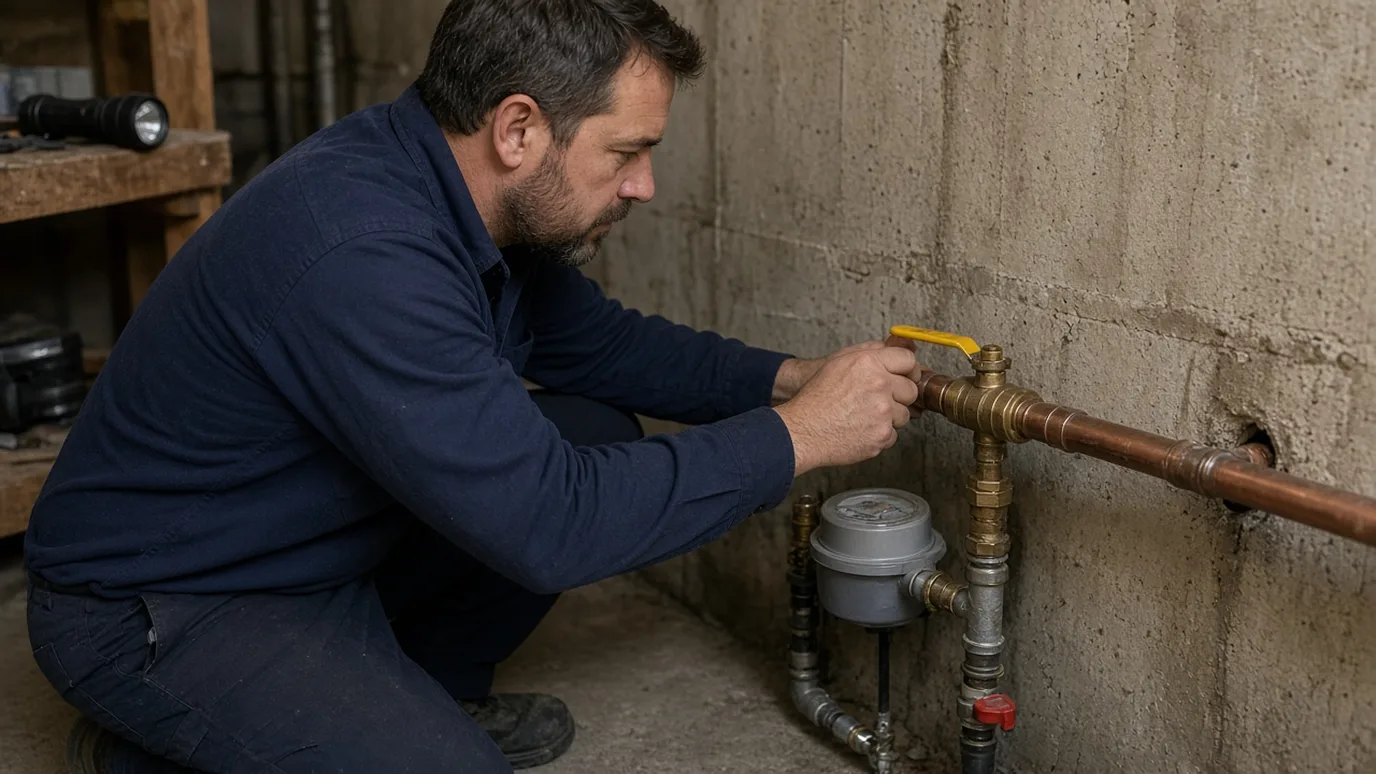
- The water is shut off upstream, usually at the curb stop or meter. That valve belongs to the water utility in many towns.
- The line is drained and the old valve is cut out.
- A new valve is soldered, pressed, or fitted with push-to-connect fittings.
- Water is restored slowly and the joints are checked for leaks.
Angi notes many towns require a permit for main valve work, with fees from $50 to $500. If the job involves the water service line itself, a licensed plumber is required. Our water and sewer line repair guide explains when the problem is the line, not the valve.
When to call
Call when a valve will not turn, will not stop the water, or drips after you snug the packing nut. Do not wait for a burst pipe to find out.
We replace stuck fixture valves and help Long Branch homeowners plan main valve upgrades, and we bring in a licensed plumber when the job needs one. See our plumbing services or call (732) 924-8444. If low pressure is the real complaint, read what causes low water pressure first. A toilet valve that will not close is a common reason a toilet leaking at the base turns into a bigger mess.
Frequently Asked Questions
How much does a plumber charge to replace a water shut-off valve?
Angi reports most homeowners pay $375 to $600 to replace a main shut-off, with a $500 average. HomeGuide puts the typical range at $250 to $600. An easy basement valve can cost less. A buried valve costs more.
What is the typical life expectancy of a water shut-off valve?
It depends on water quality and use. Valves that sit untouched for years tend to seize first. Replace any valve that will not turn smoothly or will not fully stop the flow, no matter its age.
Can I replace the main water shut-off valve without turning off the water?
No. The water must be shut off upstream of the main valve, usually at the curb stop or meter. In many towns that is the utility’s valve, so they may need to shut it for you.
Can you install shut-off valves yourself?
Fixture valves under sinks are a reasonable DIY job for a careful homeowner with the right fittings. The main valve is a different story. A mistake there floods the house, and some towns require a permit.
Who is responsible for replacing the main water shut-off valve?
The valve inside your home is usually the homeowner’s responsibility. The curb stop and meter often belong to the water utility. Call your water provider if you are not sure which valve you have.