Key Takeaways
- Water heater replacement in Long Branch typically costs $900 to $2,500 for a standard tank unit installed.
- Tankless water heaters run $1,500 to $4,500 installed, with higher upfront cost but longer lifespan and lower energy use.
- Most tank water heaters last 8 to 12 years. If yours is past 10 years and showing problems, replacement usually beats another repair.
- Rusty water, rumbling noises, leaks at the base, and inconsistent hot water are the clearest signs your unit is failing.
- Replacing a failing water heater before it bursts prevents water damage that can cost thousands in flooring, drywall, and mold remediation.
Water heater replacement in Long Branch, NJ costs between $900 and $2,500 for a standard tank unit in 2026, with tankless systems running $1,500 to $4,500 installed. The right time to replace is before the tank fails completely — not after 40 gallons of water flood your basement or utility closet. Here are the warning signs, cost breakdowns, and what Long Branch homeowners should know before calling a plumber.
7 Signs Your Water Heater Needs Replacement
Not every water heater problem requires a new unit. A faulty thermostat or heating element on a unit that is only five years old is a repair. But when several of these signs appear together — especially on a unit older than 10 years — replacement is usually the smarter financial decision.
1. Rusty or discolored hot water. If hot water runs brown or reddish but cold water runs clear, the tank is corroding from the inside. Anode rods sacrifice themselves to protect the tank lining, and once the rod is depleted, rust eats through the steel. Flushing the tank temporarily helps, but internal rust means the tank is structurally compromised.
2. Rumbling, popping, or banging noises. Sediment buildup on the bottom of the tank hardens over years of heating cycles. When water gets trapped under the sediment layer, it flashes to steam and creates those popping sounds. Heavy sediment also reduces efficiency and accelerates tank wear.
3. Water pooling around the base. A leak at the bottom of the tank almost always means the inner lining has failed. Tightening fittings or replacing the drain valve does not fix a corroded tank shell. This is the most urgent sign — a small leak becomes a full tank failure without warning.
4. Inconsistent water temperature. Lukewarm showers when the thermostat is set to 120°F point to a failing heating element (electric) or a deteriorating burner assembly (gas). On a unit under 8 years old, replacing the element may solve it. On an older unit, the next component failure is usually weeks away.
5. Age beyond 10 years. Most tank water heaters last 8 to 12 years with proper maintenance. Long Branch’s shore-area water — slightly higher in mineral content than inland sources — can shorten that window. Check the serial number on the manufacturer’s label: the first four digits often encode the month and year of manufacture.
6. Visible rust on the tank exterior. External rust on pipes and fittings is repairable. Rust on the tank body itself, especially near seams and welds, indicates the tank wall is thinning. Pressure testing may reveal whether the tank is still safe, but visible body rust on a unit over 8 years old is a strong replacement signal.
7. Rising energy bills with no other explanation. As sediment builds and heating elements degrade, the unit works harder to heat the same volume of water. A sudden spike in your gas or electric bill — with no change in usage — often traces back to an aging water heater running inefficiently.
If you are seeing two or more of these signs, schedule an inspection. Our water heater repair and replacement services cover both diagnosis and installation across Long Branch and Monmouth County.
Water Heater Replacement Costs in Long Branch NJ (2026)
Replacement cost depends on the type of unit, fuel source, capacity, and installation complexity. Here is what Long Branch homeowners typically pay:
| Water Heater Type | Unit Cost | Installed Cost | Lifespan |
|---|---|---|---|
| Standard electric tank (40–50 gal) | $400 to $900 | $900 to $1,800 | 8–12 years |
| Standard gas tank (40–50 gal) | $500 to $1,100 | $1,000 to $2,200 | 8–12 years |
| High-efficiency gas tank | $800 to $1,500 | $1,500 to $2,500 | 10–15 years |
| Tankless electric | $500 to $1,500 | $1,500 to $3,000 | 15–20 years |
| Tankless gas | $700 to $2,000 | $2,000 to $4,500 | 15–20 years |
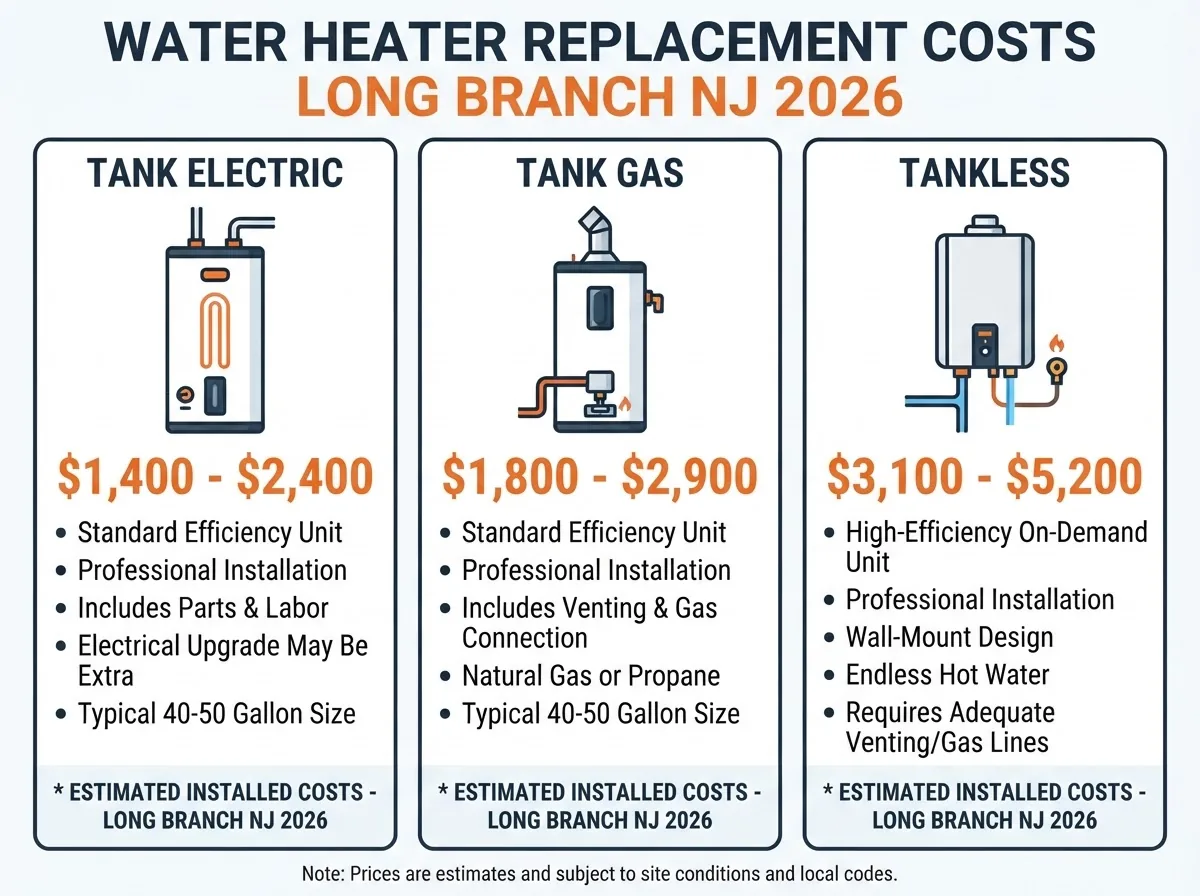
Labor for a standard swap — same location, same fuel type, existing connections in good shape — runs $250 to $600. Costs rise when the install requires new venting, gas line upgrades, electrical circuit changes, or relocation of the unit.
Tank vs. Tankless: Which Makes Sense for Long Branch Homes?
Both options work well in Monmouth County. The right choice depends on your household size, usage patterns, and how long you plan to stay in the home.
Standard tank water heaters store 40 to 50 gallons of heated water ready for use. They cost less upfront, install faster, and every plumber knows how to service them. The downside is standby heat loss — the tank constantly reheats water even when nobody is using it — and a finite lifespan of 8 to 12 years.
Tankless water heaters heat water on demand as it flows through the unit. No storage tank means no standby loss and a longer lifespan of 15 to 20 years. They cost more to install, especially if your home needs a gas line or electrical circuit upgrade. For households that use hot water intermittently — common in shore-area vacation properties and seasonal rentals — tankless units can reduce energy costs meaningfully.
Long Branch homes with large families running multiple showers back-to-back may need a higher-capacity tankless unit or a larger tank (50 to 75 gallons) to avoid running out of hot water during peak use. We assess your household’s actual demand before recommending a size.
Repair vs. Replace: When Does Each Make Sense?
A repair makes financial sense when:
- The unit is under 8 years old
- Only one component failed (thermostat, element, gas valve, anode rod)
- The tank shows no signs of rust, leaks, or sediment damage
- Repair cost is less than 50% of replacement cost
Replacement makes more sense when:
- The unit is over 10 years old and needs any significant repair
- You see rust, leaks, or sediment-related noise
- You have repaired the same component twice in the past two years
- You want to upgrade efficiency or switch from tank to tankless
Putting $400 into a 14-year-old tank with rust stains on the exterior is rarely worthwhile. That money goes toward a new unit with a fresh warranty and 10 or more years of reliable service ahead.
Our plumbing services team handles both repair and replacement. With more than 15 years serving Long Branch homeowners, we tell you honestly which path saves you money over the next five years — not just today.
What Happens During a Water Heater Replacement
A standard tank swap takes two to four hours when existing connections are in good condition. Here is the typical process:
- Shut off water, gas, or electricity to the existing unit
- Drain the old tank through the drain valve at the base
- Disconnect supply lines, gas line or electrical, and venting
- Remove the old unit and inspect the platform, pan, and surrounding area for damage
- Position the new unit, connect supply lines with new fittings
- Connect gas or electrical per manufacturer specifications
- Install or reconnect venting for gas units
- Fill, test, and check for leaks at every connection
- Set thermostat to 120°F and verify proper operation
If the install requires a permit — common for gas line work or venting changes in New Jersey — we pull it before starting. Long Branch follows the NJ Uniform Construction Code for water heater installations.
Preventing Premature Water Heater Failure
A few maintenance habits extend the life of any water heater:
Flush the tank annually. Draining a few gallons from the drain valve removes sediment buildup on the bottom. This is the single most effective maintenance step for tank units.
Test the pressure relief valve once a year. Lift the lever briefly and confirm water discharges through the overflow pipe. A stuck valve is a safety hazard.
Inspect the anode rod every three years. The rod corrodes sacrificially to protect the tank. Replacing a depleted rod costs far less than replacing the tank.
Set the thermostat to 120°F. Higher settings waste energy and accelerate sediment formation. 120°F is hot enough for household use and reduces scalding risk.
Check the area around the unit. Keep combustible materials away from gas units. Ensure the drain pan and overflow line are clear. Look for moisture on the floor during routine checks.
These steps fit naturally into a broader seasonal maintenance plan. See our home maintenance services page for what else a single visit can cover — from HVAC checks to plumbing inspections and general home repair tasks.
Long Branch-Specific Considerations
Shore-area homes face a few water heater challenges that inland NJ properties do not.
Mineral-heavy water accelerates sediment buildup inside tanks. Annual flushing is more important here than in areas with softer water.
Seasonal and vacation properties that sit unused for months may develop stagnant water issues. Running hot water through all fixtures before extended occupancy clears lines and confirms the unit is operating.
Tight utility closets in older Long Branch condos and apartments make replacement access difficult. Compact or short-height tank models exist specifically for tight spaces, and tankless units mount on walls to save floor space.
Basement flooding risk is real in low-lying shore neighborhoods. Installing a water heater on a raised platform with a drain pan and functioning overflow line limits damage if the tank eventually fails.
Need a water heater inspected, repaired, or replaced? Any Time Any Job Handyman is available 24/7 across Long Branch and Monmouth County. Call or text (732) 924-8444 for a free estimate, or reach us through our contact page.
Frequently Asked Questions
1. How long does a water heater last in Long Branch NJ?
Most tank water heaters last 8 to 12 years with regular maintenance. Tankless units typically last 15 to 20 years. Shore-area mineral content can shorten tank lifespan slightly compared to inland NJ. Annual flushing and anode rod checks are the best ways to maximize the years you get from any unit.
2. How much does it cost to replace a 50-gallon water heater in NJ?
A 50-gallon electric tank replacement typically runs $900 to $1,800 installed. A 50-gallon gas unit runs $1,000 to $2,200 installed. Price varies by brand, efficiency rating, and whether venting or gas line work is needed.
3. Can I replace a water heater myself in New Jersey?
DIY replacement is possible for experienced homeowners with electric units in accessible locations. Gas water heater installation requires proper venting, gas line connections, and often a permit — mistakes create fire and carbon monoxide risks. Most Long Branch homeowners hire a licensed plumber for the safety assurance and warranty coverage on the installation.
4. Is a leaking water heater an emergency?
Yes. A leak at the base of the tank means the inner shell has failed and the tank can rupture fully at any time. Shut off the water supply to the unit, turn off the gas or electricity, and call a plumber immediately. Do not wait to see if the leak stops on its own.
5. Does homeowners insurance cover water heater replacement?
Standard policies cover sudden water damage from a failed unit — flooded floors, damaged belongings — but not the cost of replacing the water heater itself. Routine wear and age-related failure is considered maintenance. If the tank ruptures and causes property damage, document everything with photos before cleanup and contact your insurer promptly.