Key Takeaways
- Homewyse’s May 2026 national estimate for painting a home interior starts at $4.79–$9.04 per square foot of paintable area, including basic prep and two coats.
- Walls-only work is lower: about $1.29–$2.78 per square foot on Homewyse’s wall calculator.
- A single living room runs about $4.22–$8.19 per square foot when trim and doors are in scope.
- Long Branch shore humidity, salt air near the beachfront, and older plaster walls push prep time up. Prep, not paint, is where quotes differ most.
- Pre-1978 homes need lead-safe work practices when sanding or scraping old paint.
Interior painting in Long Branch usually costs more per room than a quick national headline suggests, because the real work is patching, sanding, caulking, and protecting floors. For a typical bedroom, expect a number driven by square footage, ceiling height, trim count, and how many dings need filling before the first coat.
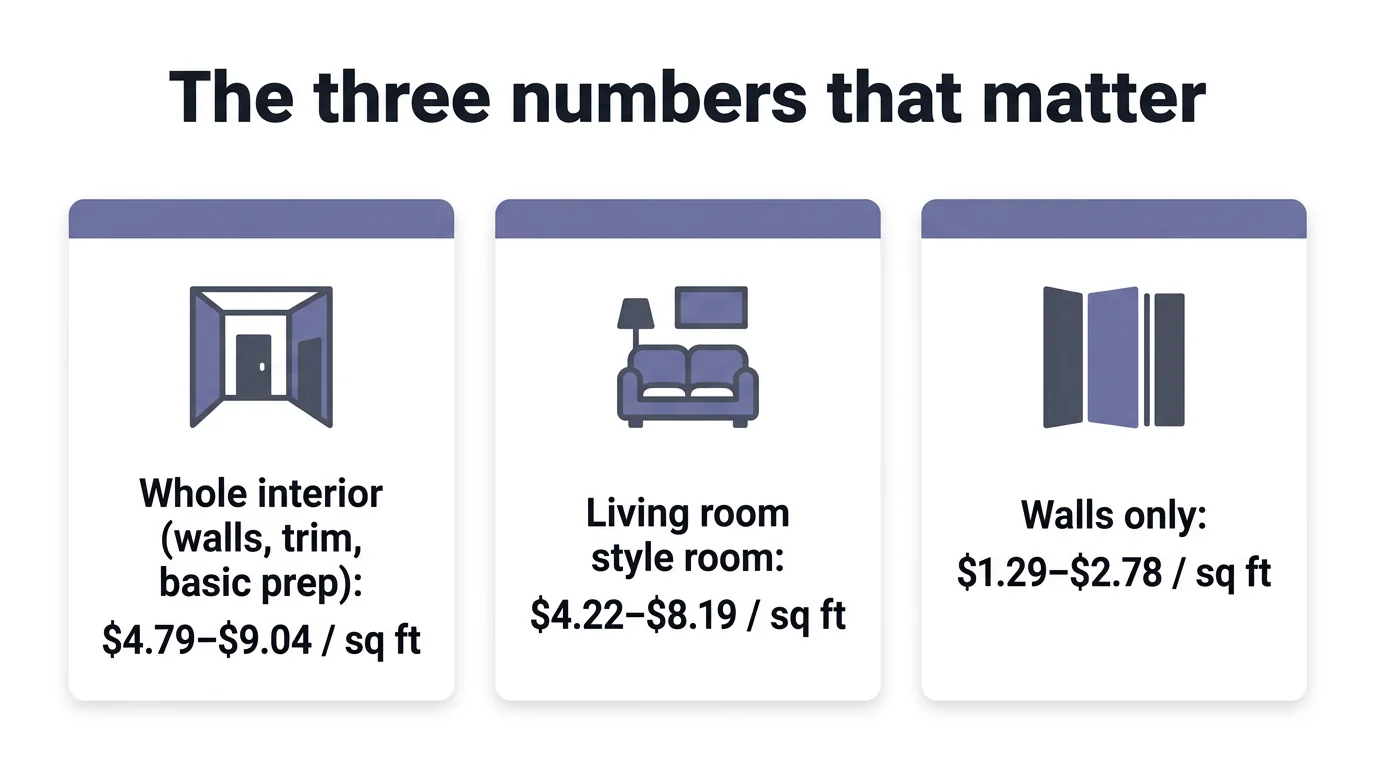
The three numbers that matter
Painters quote in different ways. Some price per room. Others price per square foot of floor or of wall surface. Before you compare quotes, translate them to one measure.
| Scope | National estimate (Homewyse 2026) | Best use |
|---|---|---|
| Whole interior (walls, trim, basic prep) | $4.79–$9.04 / sq ft | Full repaints, move-ins |
| Living room style room | $4.22–$8.19 / sq ft | One or two rooms with trim |
| Walls only | $1.29–$2.78 / sq ft | Color change, no trim |
What it means for your home: If one quote says “$X per room” and another says “per square foot,” ask each for the wall area they measured. A 12x14 bedroom with 9-foot ceilings has far more paintable surface than its floor area suggests.
What raises the price in Long Branch homes
Long Branch has everything from 1920s bungalows to new condos near Pier Village. Each brings different prep.
Plaster and lath. Older homes crack at corners and around windows. Filling and feathering those cracks takes time. Skipping it means the cracks telegraph through new paint in one winter.
Salt air and humidity. Rooms near the beach see mildew on bathroom ceilings and window returns. Mildew must be cleaned and treated before priming, or it bleeds through.
Trim and doors. Every door slab, casing, and baseboard run adds brushwork. Homewyse’s room estimates include up to two doors and door trim per room in their basic labor line, but a hallway full of doors changes the math.
Ceilings. Flat ceilings in white are often a separate line. Popcorn or textured ceilings add masking and slower rolling.
Color change. Going from dark red to light gray usually needs primer plus two finish coats. Same-color refreshes can sometimes skip primer.
We see this most in older Long Branch homes: the walls look fine from across the room, but a raking light shows years of nail pops and patch ridges. Good painters find those before they open a can.
Prep checklist before the painter arrives
You can lower the bill by clearing the room, but the labor-heavy prep is still the painter’s job.
- Remove wall art, outlet covers, and small furniture.
- Point out stains, water marks, and cracks you already know about.
- Decide on sheen per room (flat ceilings, eggshell walls, semi-gloss trim is a common split).
- Confirm whether closets are included.
- Ask how floors and furniture will be protected.
For dings, nail pops, or water-damaged spots, ask for drywall repair on the same visit. A Homewyse drywall repair estimate starts near $297–$472 per repair, and fixing those before paint is cheaper than repainting twice.
Lead paint in older Long Branch housing
Homes built before 1978 may have lead-based paint under newer coats. Sanding, scraping, or heat-stripping those layers can create hazardous dust.
The EPA’s Renovation, Repair and Painting rule requires certified firms and lead-safe practices for work that disturbs paint in pre-1978 homes and child-occupied facilities. EPA also explains how lead dust from old paint is a common source of exposure.
Ask any painter how they contain dust, clean up, and dispose of debris. Plastic sheeting, HEPA vacuums, and wet wiping are standard on those jobs. They also add time, which shows up in the quote.
DIY vs hiring a pro: an honest comparison
| Factor | DIY | Pro painter / handyman |
|---|---|---|
| Upfront cost | Paint, tools, tape | Labor plus materials |
| Prep quality | Often rushed | Patching and caulk included |
| Time | Weekends | Usually days, not weeks |
| Ceilings and high walls | Ladder risk | Staging and experience |
| Lead-safe work (pre-1978) | Easy to get wrong | Should follow RRP rules |
DIY makes sense for a single accent wall in a newer condo. Hiring out makes sense for full rooms, ceilings, stairwells, or anything in an older home where prep and lead rules matter.
Our painting service page lists what a typical interior visit covers. After water stains from a leak, finish the plumbing first (see our Long Branch plumber cost guide), then paint so you are not coating a still-wet patch. If you are remodeling a bath at the same time, see the Monmouth County bathroom remodel cost guide so paint and tile are scheduled in the right order.
Materials that hold up near the shore
Not every paint formula likes humid bathrooms or salty air near open windows.
Look for mildew-resistant formulas in baths and kitchens. Prefer washable eggshell or satin on kids’ rooms and halls. Flat hides wall imperfections on ceilings but marks more on walls.
Primer matters more than brand marketing. Stain-blocking primer under water spots, nicotine, or old oil paint stops bleed-through. Skipping primer to save a day is how you get a second trip.
If you are also replacing trim or casing before paint, schedule trim carpentry first so the painter is not cutting in against unfinished wood twice.
Timing your project around shore seasons
Paint cures best with steady temperatures and moderate humidity. Long Branch summers can be sticky, which slows drying and can cause lap marks. Winter brings dry heat but also closed windows, so ventilation needs a plan.
Spring and early fall are the easiest windows for interior work in many shore homes. If you are hosting summer guests, book painting before Memorial Day.
Heating season also exposes drafts that show up as dirty lines on walls near outlets and baseboards. Sealing those leaks before painting helps the new finish stay clean. Our heating bill tips for Long Branch cover simple draft fixes.
How to read a painting quote
A useful quote lists:
- Rooms or square feet included
- Ceilings, trim, doors, and closets (yes or no)
- Number of coats and whether primer is included
- Patching and caulk scope
- Paint brand and sheen
- Protection and cleanup
- Start date and expected duration
If a quote is a single number with no scope, ask for detail. Vague quotes are where surprise change orders hide.
If you want a straight number for your rooms, call or text (732) 924-8444. Estimates are free, and most interior jobs can be priced from photos and room sizes before anyone visits.
Frequently Asked Questions
How much does it cost to paint the inside of a 1,500 square foot house?
Paintable surface area, not floor area, drives the cost. As a national planning band, Homewyse estimates $4.79–$9.04 per square foot of paintable area for basic whole-interior work. Measure walls, ceilings, and trim to estimate your actual surface.
How much do painters charge to paint a 12x12 room?
It depends on ceiling height, trim, doors, and prep. Homewyse’s living-room style estimate is $4.22–$8.19 per square foot of paintable surface, which is a reasonable starting point for a bedroom with trim and one or two doors.
How long does it take to paint a house interior?
Small rooms often take a day. A full interior can take several days to over a week, depending on prep, drying time between coats, and how many rooms must stay usable while work continues.
Do I need lead-safe painting in Long Branch?
If your home was built before 1978 and the work will sand, scrape, or cut painted surfaces, lead-safe practices under EPA’s RRP rule apply to contractors.