Key Takeaways
- A plumbing emergency is active flooding, no water shutoff, sewage in living space, or a freeze that will burst if left overnight.
- National averages for a moderate burst pipe repair cluster near $500, with many jobs between $200 and $1,000.
- If water reaches finishes, restoration often lands in the $1,200–$5,000 range, averaging about $3,000 for gray-water bathroom work.
- EPA WaterSense says the average family can waste 9,400 gallons a year from household leaks, so even slow drips deserve a fix.
- Know your main shutoff before a 2am failure. Long Branch winters and freeze-thaw weeks make that habit non-negotiable.
If water is spreading across a floor or a supply line is spraying, you need a shutoff first and a plumber second. Cost talk comes after the flood stops. In Long Branch, those calls often hit nights and holidays because freezes and storm surges do not wait for business hours.
What counts as an emergency (and what can wait until morning)
Call it an emergency when:
- Water cannot be stopped at a fixture or local valve
- Sewage is backing into tubs, basements, or floors
- A pipe has burst or is actively spraying
- A water heater is leaking onto electrical equipment
- A freeze has a rigid, swollen section that will split if you leave it
These can wait overnight in most cases:
- A slow drip under a sink with a working shutoff
- One toilet that runs but does not overflow
- Hot water that is weak but still present
- A clogged sink with other working drains
EPA’s leak guidance is blunt about silent waste: the average household’s leaks can account for more than 9,300 gallons wasted every year. A “small” drip is still a bill and a mold risk if it sits in a cabinet for weeks.
First five minutes: stop the water
- Shut the fixture valve if you can reach it.
- If not, shut the main water valve (often near the meter, basement wall, or crawl-space entry).
- Open a faucet at the lowest level to relieve pressure.
- Kill power to wet areas if water is near outlets or the heater.
- Call for help with photos of the leak location and the shutoff status.
Ready.gov’s winter weather checklist also stresses knowing how to keep pipes from freezing and where shutoffs are before a storm. The American Red Cross recommends keeping heat on (at least around 55°F when you’re away in cold weather) to reduce freeze risk.
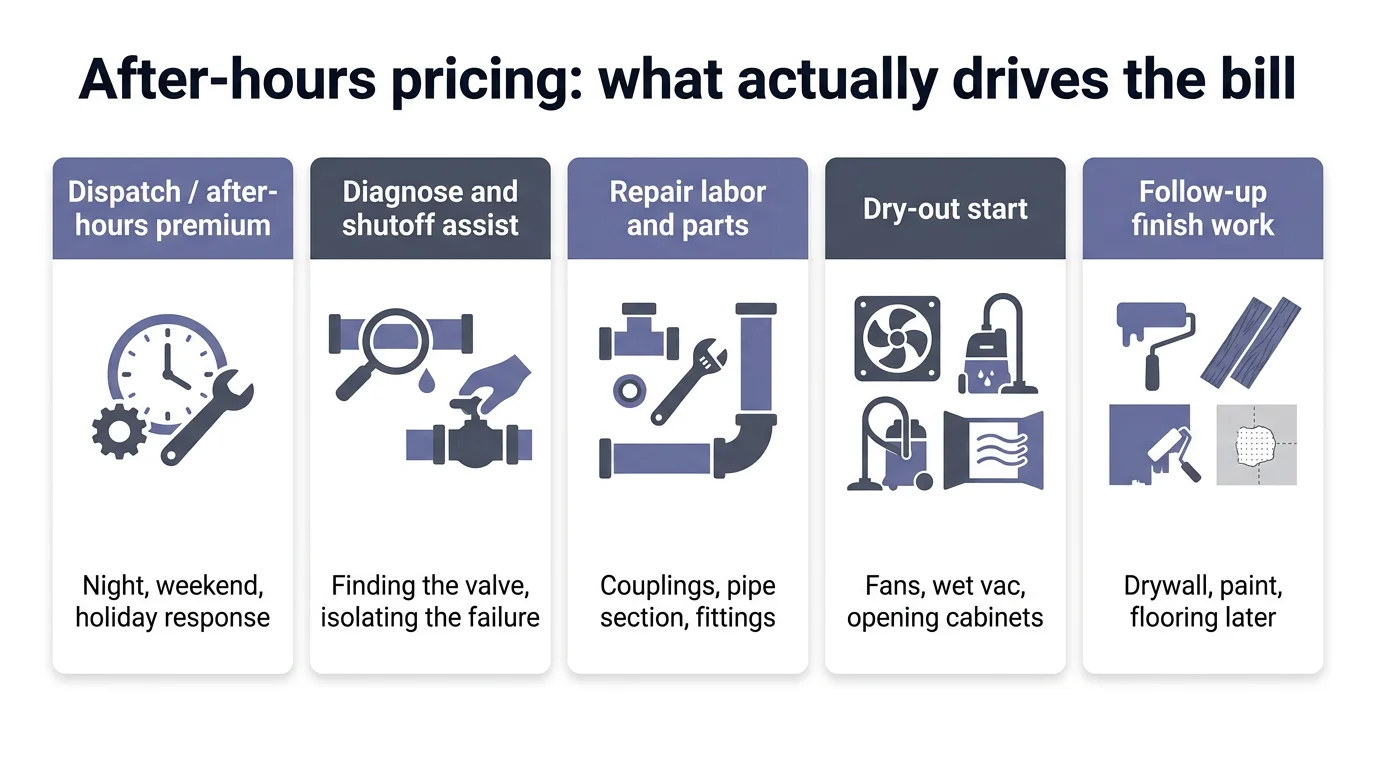
After-hours pricing: what actually drives the bill
Emergency plumbing invoices usually stack:
| Cost piece | What it covers |
|---|---|
| Dispatch / after-hours premium | Night, weekend, holiday response |
| Diagnose and shutoff assist | Finding the valve, isolating the failure |
| Repair labor and parts | Couplings, pipe section, fittings |
| Dry-out start | Fans, wet vac, opening cabinets |
| Follow-up finish work | Drywall, paint, flooring later |
A moderate section repair on a burst often falls near Fixr’s $500 average nationally, with a $200–$1,000 typical band. After-hours premiums sit on top of that. Ask for the emergency dispatch fee and the repair estimate as separate lines so you can see what you are buying.
If finishes are soaked, budget restoration separately. Fixr’s water damage restoration average is about $3,000, with many jobs between $1,200 and $5,000.
We answer 24/7 for Long Branch and the Monmouth County shore. Estimates are free. Most jobs can be priced once we know what failed and whether the main is shut. See plumbing services and drain cleaning for non-emergency scopes, and the Long Branch plumber cost guide for how daytime quotes are framed.
Common Long Branch emergency calls
Supply line bursts. Flexible supply lines under sinks and toilets fail without much warning. Keep a towel and a bucket under older ones, and know the local shutoff.
Frozen / thawing pipes. Exterior walls, crawl spaces, and hose bibs are the usual suspects in older Long Branch homes. Never thaw with an open flame. Warm air and patience beat a second rupture.
Water heater leaks. A tank that weeps at the base is often end-of-life. Catch the water, shut supply and power or gas per the label, and treat it as urgent if the leak is growing.
Sewer backups. Lowest fixtures flood first. If multiple fixtures back up, stop using water and call. A single sink clog is different from a lateral failure.
Storm-related surcharge. Heavy rain and high groundwater near Branchport Creek can push municipal systems hard. Backups that only appear in storms need a different diagnosis than a simple clog.
For basement water that is seepage rather than a burst, compare approaches in our waterproofing guide. Ice dams that drip into ceilings can look like plumbing until you check the attic; start with gutter and ice checks.
Permits after the emergency is stabilized
Stopping a flood is first. Paperwork comes after the water is off.
New Jersey’s Uniform Construction Code separates ordinary maintenance from alterations. Clearing stoppages and many like-for-like fixture swaps sit in the ordinary-maintenance list in the Construction Code Communicator. Replacing piping sections or rearranging supply and drainage often needs a plumbing permit under the UCC framework.
Long Branch’s Plumbing Subcode Official is the office that will tell you which bucket applies once the emergency repair scope is clear. We flag permit needs before the permanent repair is scheduled.
What to tell the dispatcher
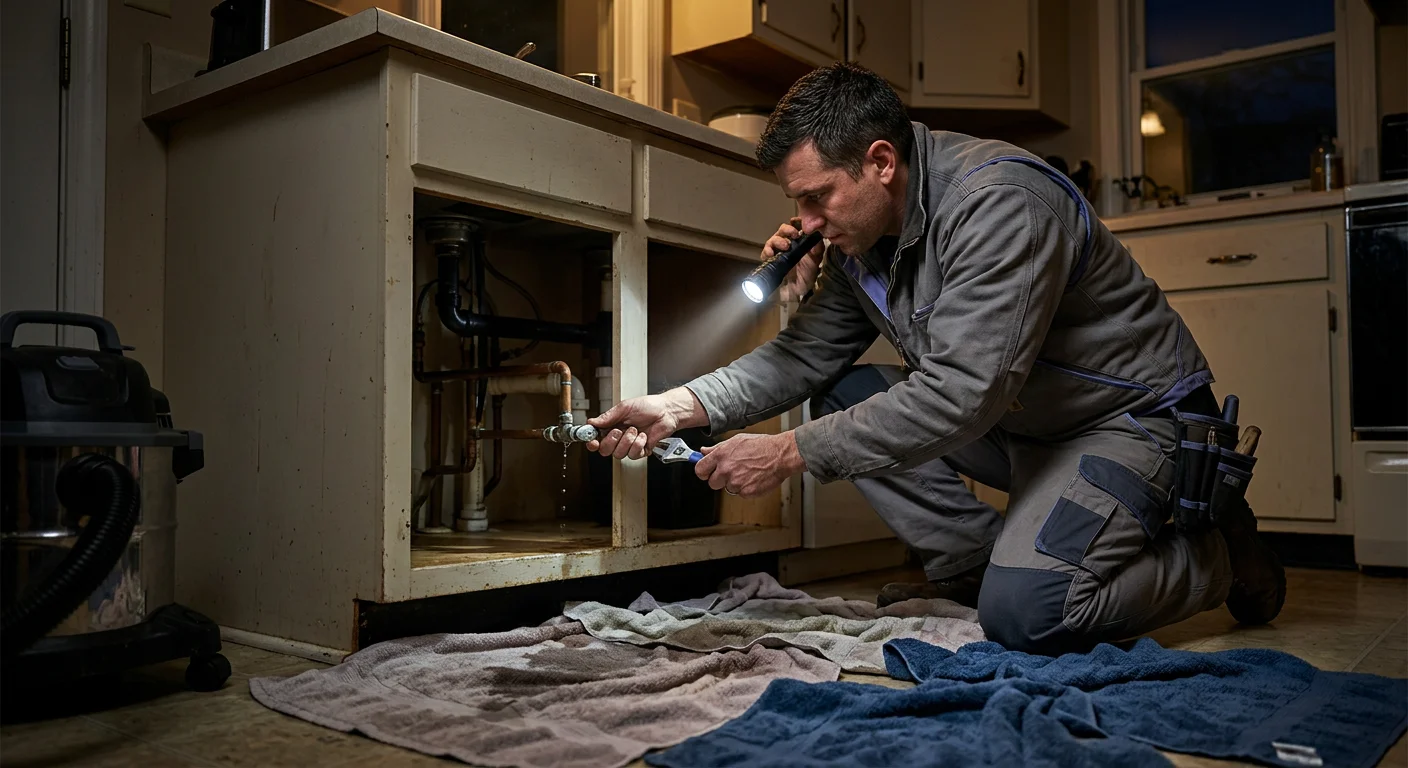
Clear details save time and money on an after-hours call.
Say which fixture or pipe failed, whether the main is off, and roughly how much water is on the floor. Mention the age of the water heater if it is involved. Send a photo of the leak and of any valve you tried to turn.
Also say if you rent or own. Landlord approval can change who authorizes the repair. Those few facts let us bring the right fittings on the first trip instead of a second visit at a second premium.
How to prepare so the next call is cheaper
- Label the main shutoff with a bright tag.
- Keep a wet vac, towels, and a flashlight where you can reach them in the dark.
- Photo your water heater model and shutoffs now.
- Replace brittle supply lines on a schedule, not after they fail.
- Keep heat on during cold snaps, even if you are away for a weekend (Red Cross frozen-pipe guidance).
When you call, say whether the main is shut, what is wet, and whether anyone is home. That information cuts diagnosis time.
If water is moving and you need someone now, call or text (732) 924-8444. We answer nights, weekends, and holidays for Long Branch emergencies.
Frequently Asked Questions
What is considered a plumbing emergency?
Active flooding you cannot stop, sewage in living space, a spraying burst, or a freeze that will rupture if left. Slow drips with a working shutoff can usually wait for daytime service.
How much does an emergency plumber cost?
Expect an after-hours premium on top of the repair. A moderate burst section often falls near $500 nationally before premiums. Ask for dispatch and repair as separate lines.
Do I need a plumber to replace a water heater?
In New Jersey, water heater replacement is typically regulated work and often needs a permit path. A leaking heater that is flooding is an emergency shutoff first, then a planned replacement with the right license and inspection.
Why do pipes freeze in Long Branch homes?
Uninsulated lines in exterior walls, crawl spaces, and hose bibs lose heat fast in cold snaps. Shore winds and older housing stock make those spots common. Keep heat on and open cabinet doors on exterior walls during deep freezes.
Sources
- Fixr: Burst Pipe Repair Cost
- Fixr: Water Damage Restoration Cost
- EPA WaterSense: Statistics and Facts
- EPA WaterSense: Fix a Leak Week
- Ready.gov: Winter Weather
- American Red Cross: Preventing & Thawing Frozen Pipes
- NJ DCA: UCC General Information (PDF)
- NJ DCA: Construction Code Communicator, Spring 2018 (PDF)