
Spring arrives in Monmouth County, and most homeowners are thinking about warmer weather, open windows, and getting back outside. What they should also be thinking about is everything winter just put their home through.
Between freezing temperatures, freeze-thaw cycles, ice, and moisture, New Jersey winters are hard on homes. Spring is your window to catch problems early before a cracked gutter becomes a flooded basement, before a damaged shingle becomes a ceiling stain, and before a small caulk failure becomes a rotted window frame.
Experts consistently note that regular home maintenance saves homeowners 1–4% of their home’s value annually by preventing costly emergency repairs. Skipping spring upkeep can lead to repair bills averaging $5,000 or more when small problems go unaddressed.
This checklist covers everything Monmouth County homeowners should address this spring, organized by area of the home, so you can work through it systematically.
Roof and Gutters
Your roof and gutters took the brunt of winter. This is where most costly surprises originate if left unchecked.
Roof Inspection
- Look for missing, cracked, or shifted shingles using binoculars from the ground, or hire a professional to do a close inspection
- Check for nail pops — nails that have worked their way up through the shingles, creating entry points for water
- Inspect flashing around chimneys, vents, and skylights for lifting, gaps, or rust
- Look for sagging sections that may indicate water damage beneath the sheathing
Gutters and Downspouts
- Clear all debris — leaves, twigs, and shingle granules from gutters and downspouts
- Check that gutters are firmly attached and haven’t pulled away from the fascia over the winter
- Test flow by running a hose through the system; look for leaks at seams and joints
- Confirm downspouts direct water at least 3–4 feet away from the foundation
- Consider adding downspout extensions if water is pooling near the foundation
Clogged or damaged gutters are one of the leading causes of basement flooding and foundation damage in Long Branch. This is not a task to defer.
Exterior Walls and Siding
Walk the full perimeter of your home and examine the exterior closely.
- Check all siding panels for cracks, gaps, warping, or soft spots that indicate rot
- Look for areas where panels have separated or pulled away from the trim
- Inspect caulking around all windows, doors, and utility penetrations (pipes, wires, vents), winter expansion and contraction break down caulk seals annually
- Check for mold, mildew, or algae growth that may signal moisture is being trapped
- Note any areas where paint is peeling or bubbling, which can indicate moisture behind the siding
If you notice signs of siding damage, address them. Early summer rain and humidity will accelerate any existing moisture infiltration.
Windows and Doors
Windows
- Inspect all window seals and glazing for cracks or gaps
- Check the weather stripping along the frame. Compressed or torn weather stripping should be replaced
- Test all operable windows to ensure they open, close, and lock properly
- Clean window tracks and lubricate hardware
- Inspect screens for holes or tears and repair or replace before summer
Doors
- Check the weather stripping on all exterior doors. Hold a piece of paper against the door frame when closed; if it slides out easily, the seal needs replacing
- Inspect door sweeps at the base of exterior doors
- Check that deadbolts and door hardware are functioning properly
- Inspect the door frame for soft spots or rot, especially at the threshold
A failed door seal can increase your heating and cooling costs noticeably. Any Time Any Job Handyman handles weather stripping replacement and door adjustments as part of general spring service calls.
Foundation and Basement
Foundation issues caught early are manageable. Caught late, they’re expensive.
- Walk the foundation perimeter and look for new cracks in the masonry. Hairline cracks are normal; wide cracks or horizontal cracks warrant professional evaluation
- Check the basement walls for water staining, efflorescence (white mineral deposits), or damp spots that indicate water is migrating through the wall
- Inspect basement floor drains and ensure they’re clear
- Test your sump pump: pour a bucket of water into the pit and confirm the pump activates and removes the water
- Check basement window wells for standing water and clear any debris
If your sump pump hasn’t been tested or serviced in over a year, spring is the time to do it, not during the first heavy rainstorm of the season.

HVAC System
Your heating system worked hard all winter. Before the summer cooling season begins, address the following:
- Replace HVAC filters — dirty filters reduce efficiency and air quality; replace every 1–3 months
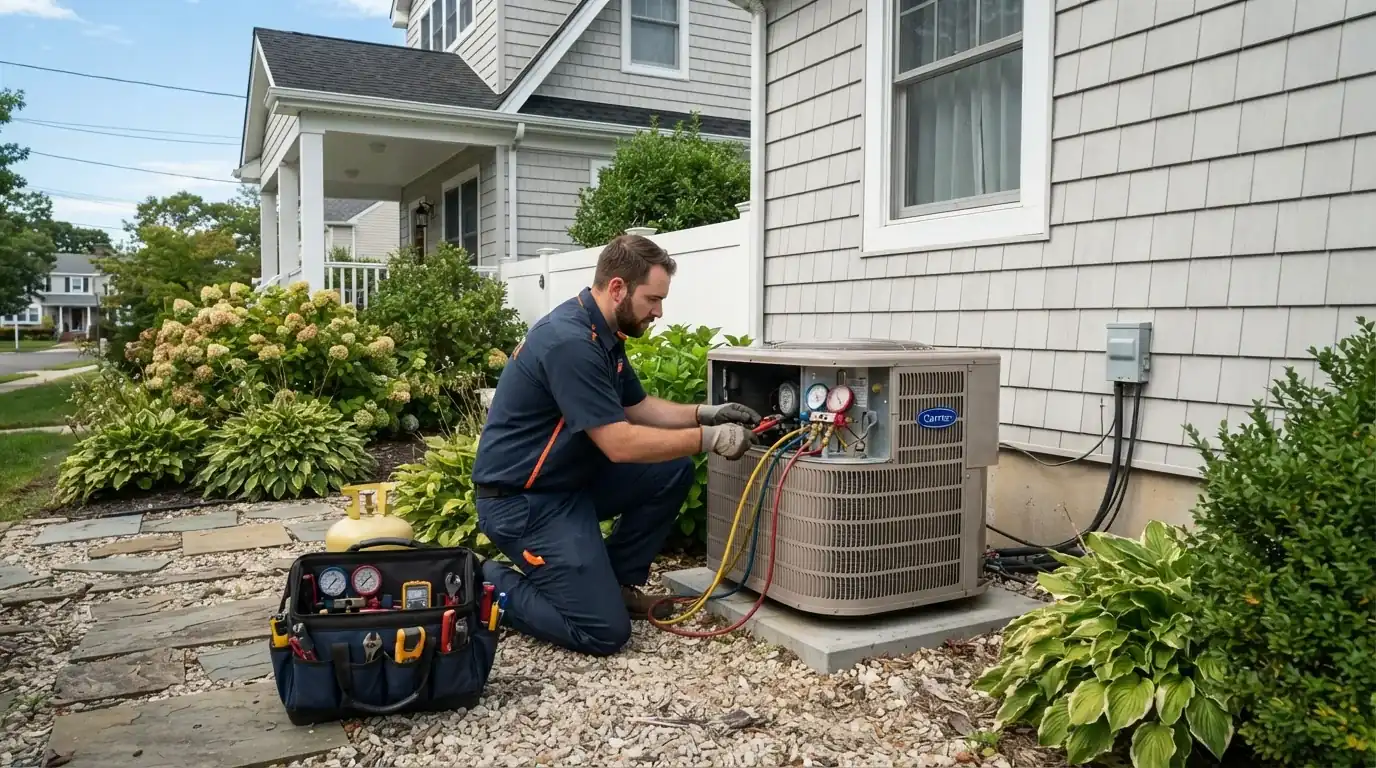
- Clean around outdoor AC units — clear leaves, dirt, and debris from around condenser units; maintain at least 2 feet of clearance on all sides
- Schedule a professional AC tune-up before peak cooling season; a technician can identify worn belts, low refrigerant, and other issues before they become failures
- Test the AC — run the system before a hot day to confirm it’s cooling properly
- Check vents and registers — ensure all registers are open and unobstructed by furniture or rugs
According to Energy Star, a properly maintained HVAC system uses significantly less energy than a neglected one. A spring tune-up pays for itself in efficiency gains over the summer.
Plumbing
Winter is hard on pipes. Spring inspection catches damage before it becomes a leak.
- Check all outdoor faucets (hose bibs) for cracking or damage caused by residual water freezing after you shut them off for winter
- Inspect exposed pipes in basements, crawl spaces, and garages for corrosion, leaks, or signs of stress
- Check under all kitchen and bathroom sinks for slow drips or corrosion at the supply and drain connections
- Inspect the water heater for rust, corrosion, or sediment buildup; flush the tank if it hasn’t been done in the past year
- Test all toilets for running water A running toilet can waste 200+ gallons per day
Interior: Attic, Insulation, and Pests
The attic is often the most neglected space in a home — and one of the most revealing.
- Inspect the attic for signs of pest activity: droppings, chewed insulation, nesting materials
- Look for mold or dark staining on the underside of the roof sheathing, which indicates inadequate ventilation or a roof leak
- Check insulation for compression, moisture damage, or areas that have been disturbed
- Confirm attic ventilation is clear — blocked vents cause moisture buildup and accelerate shingle deterioration
Decks, Patios, and Outdoor Spaces
Before you set up the patio furniture, take 30 minutes to check these:
- Deck boards: Walk the deck and look for soft, spongy, or visibly rotted boards; check that boards are still securely fastened
- Deck fasteners: Look for raised screw heads, popped nails, or loose board connections
- Ledger board: Inspect where the deck attaches to the house — this joint is a common failure point and a safety issue
- Railings: Test all railings for stability; loose railings are a serious safety hazard
- Concrete and pavers: Check walkways, steps, and patio surfaces for heaved or cracked sections caused by frost
- Pressure wash surfaces: Clean decks, patios, and driveways to remove winter grime, mildew, and salt residue
If your deck needs staining or sealing after the pressure wash, spring is the ideal time before heavy UV exposure sets in. Contact Any Time Any Job for deck maintenance, board replacement, or full pressure washing services.
Quick-Reference Spring Checklist
| Area | Task | Priority |
|---|---|---|
| Roof | Inspect shingles, flashing, and nail pops | High |
| Gutters | Clear debris, test flow, check attachment | High |
| Siding | Inspect for cracks, rot, mold, and gaps | High |
| Windows/Doors | Check seals, weather stripping, and hardware | Medium |
| Foundation | Inspect for cracks, test sump pump | High |
| HVAC | Replace filters, AC tune-up, clean units | High |
| Plumbing | Check outdoor faucets, under-sink pipes | Medium |
| Attic | Check for pests, mold, and insulation | Medium |
| Deck/Patio | Inspect boards, railings, and pressure wash | Medium |
| Landscape | Remove debris, inspect drainage | Low |

Don’t Let the List Overwhelm You
A full spring walkthrough takes a few hours. Most of what you find will be minor — a failed caulk seal here, a clogged downspout there. But every so often, that inspection catches something significant before it becomes a $5,000 emergency.
If you find items on this list that need professional attention, Any Time Any Job Handyman is available 24/7, 365 days a year throughout Monmouth County. We handle everything from gutter cleaning and caulk repairs to siding fixes, deck maintenance, and plumbing checks — all in a single service call.
Call or text us at (732) 924-8444 to schedule your spring maintenance walkthrough today. Free quotes in 30 minutes.
Serving Long Branch, Red Bank, Middletown, Neptune, Asbury Park, Tinton Falls, and all of Monmouth County, NJ. Fully licensed and insured.