

Key Takeaways:
- Air leaks account for up to 40% of heating and cooling energy use in your home
- Sealing and insulating can reduce energy consumption by 45% with proper application
- Home energy costs have increased by more than 35% since 2020, making efficiency critical
- Simple draft sealing around windows and doors delivers immediate savings
- Thermostat adjustments and zone heating cut costs without sacrificing comfort
- Professional energy audits identify hidden problems costing you hundreds annually
- Strategic insulation upgrades pay for themselves through lower monthly bills
- Most quick fixes take under two hours and require minimal investment
Introduction
Your heating bill just arrived and the number makes you wince. You’re not alone—heating costs increased roughly 17% from last winter to this season.
The good news? Most high heating bills in Long Branch, NJ stem from fixable problems. Air leaks, poor insulation, and inefficient heating habits drain your wallet every single day. Any Time Any Job Handyman helps homeowners tackle these issues with practical solutions that work.
Small fixes make big differences. We’ll show you exactly where your money’s disappearing and how to stop it.
What’s Actually Causing Your High Heating Bill in Winter?
Your heating system isn’t the villain—it’s working overtime because heat escapes constantly.
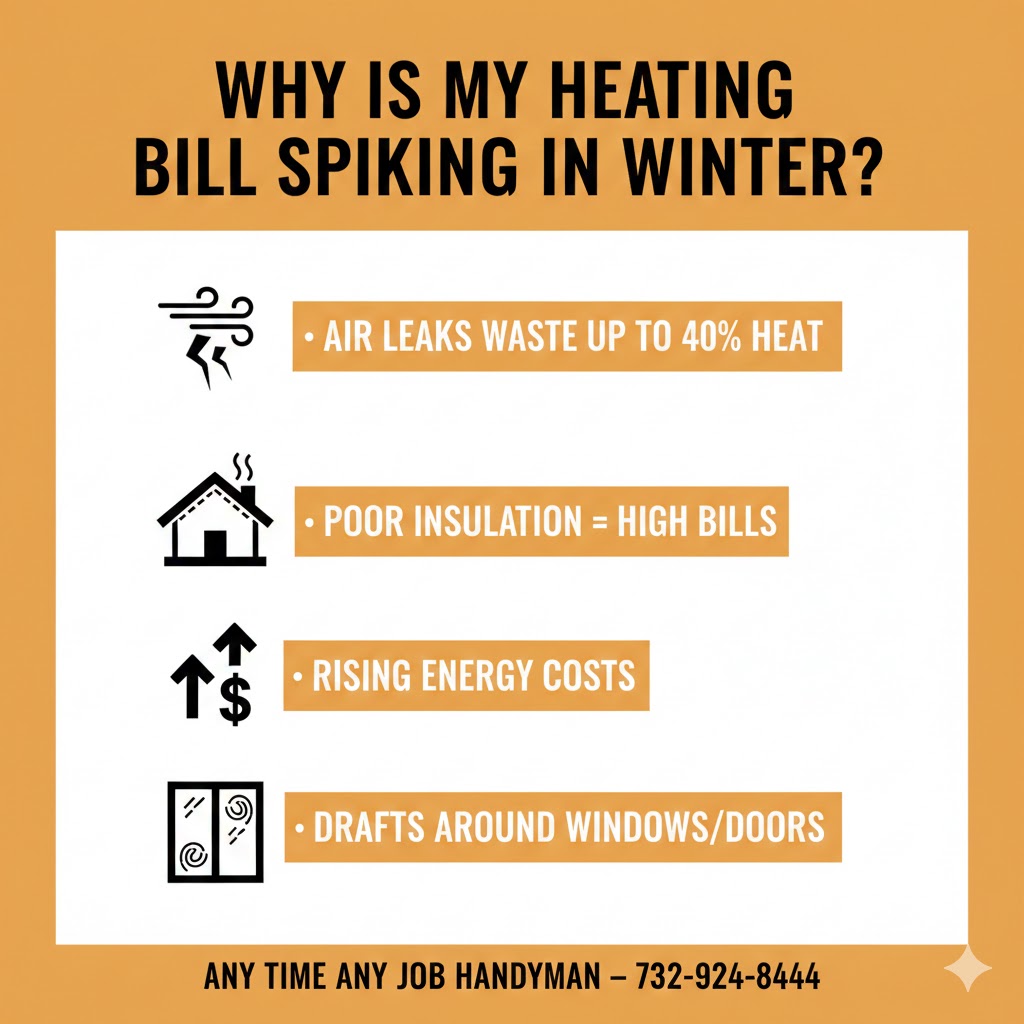
Air leakage alone accounts for up to 40% of heating energy consumption. That’s nearly half your bill going straight outside through gaps you probably can’t even see.
Cold air sneaks in through window frames, door thresholds, attic hatches, electrical outlets, and basement rim joists. Your furnace runs constantly trying to compensate. It’s like filling a bucket with holes—you’re paying to heat the outdoors.
Poor insulation compounds the problem. Attics without adequate coverage lose heat through the roof. Walls with settling insulation create cold spots. Uninsulated crawl spaces turn floors into ice.
Old windows with single-pane glass transfer heat directly outside. Worn weatherstripping around doors creates visible gaps. Uninsulated ductwork in cold basements wastes heated air before it reaches your rooms.
Here’s what kills budgets in Long Branch homes: These problems stack. One draft plus poor attic insulation plus an inefficient thermostat setting can triple your heating costs compared to a properly sealed home.
How Can Draft Sealing Immediately Lower My Energy Bills?
Draft sealing delivers the fastest return on investment for energy efficiency improvements.
Start with the obvious spots. Check every window and exterior door in your home. Light a candle near the edges on a windy day—if it flickers, you’ve found a leak.
Apply weatherstripping to door frames. The foam or rubber strips cost $5-10 per door and install in minutes. They block the gap between the door and frame completely.
Caulk window frames where glass meets wood or vinyl. One tube of exterior caulk ($4-6) seals 3-4 standard windows. Focus on visible cracks first, then run a bead along all edges.
Install door sweeps on exterior doors. The bristle or rubber strip attaches to the door bottom and blocks the gap over your threshold. These cost $10-15 and take ten minutes to screw in place.
Don’t ignore electrical outlets on exterior walls. They leak cold air through the wall cavity. Pop off the cover plate, insert a foam gasket ($3 for a pack), and replace the plate.
Attic hatches are massive heat losers. Add weatherstripping around the frame and place rigid foam insulation on top of the hatch itself. This one fix can save 5-10% on heating costs.
The basement rim joist—where your foundation meets your floor framing—leaks like crazy. Seal it with spray foam or rigid foam board cut to fit between joists.
These fixes cost under $100 total for most homes. The payback period is usually one winter. Our home maintenance services team can complete all draft sealing in a single visit if you prefer professional installation.
What Insulation Upgrades Offer the Best Energy Efficiency for Homes?
Insulation works differently than draft sealing—it slows heat transfer rather than stopping air movement.
Attic insulation delivers maximum impact. Heat rises, and your attic is the escape route. Long Branch homes need R-38 to R-60 in attic spaces depending on existing coverage.
Blown-in cellulose or fiberglass fills attic floors completely and covers joists. The material settles into gaps that batt insulation misses. Professional installation costs $1.50-2.50 per square foot but can cut energy use by up to 45% when combined with air sealing.
Wall insulation is trickier in existing homes. If you’re planning renovations, add insulation then. Otherwise, blown-in wall insulation through small holes offers a retrofit option.
Basement and crawl space insulation stops cold floors. Rigid foam board on foundation walls provides R-10 to R-20 depending on thickness. Insulated rim joists prevent the coldest air infiltration.
Pipe insulation seems minor but saves constantly. Foam tube insulation ($2-3 per six-foot length) wraps hot water pipes and reduces heat loss before water reaches your faucets.
Duct insulation matters if your ductwork runs through unconditioned spaces. Insulated flex duct or rigid duct with wrap keeps heated air hot until it enters your rooms.
Window film and cellular shades add insulation value to existing windows. They won’t match new windows but cost 90% less and still reduce heat transfer.
Check your current insulation before adding more. Our team provides free assessments to identify which upgrades will actually lower your specific heating bills.
How Do I Optimize My Heating System Without Major Renovations?
Smart heating habits cut costs immediately without spending a dollar.
Lower your thermostat 7-10 degrees when you’re sleeping or away. A programmable thermostat ($30-50) automates this and saves 10% on heating costs annually.
Zone heating focuses warmth where you actually spend time. Close vents in unused rooms and shut doors. Heat only occupied spaces during the day.
Reverse ceiling fan direction in winter. Clockwise rotation (looking up) pushes warm air down from the ceiling. This simple switch makes rooms feel 2-3 degrees warmer.
Keep vents and radiators clear. Furniture and drapes blocking heat output force your system to work harder. Maintain six inches of clearance minimum.
Change furnace filters monthly during heating season. Dirty filters restrict airflow and reduce efficiency by 5-15%. New filters cost $1-3 each—it’s the cheapest maintenance you can do.
Schedule annual furnace maintenance. Professional cleaning and adjustment keeps systems running at peak efficiency. Our licensed handyman team offers comprehensive HVAC tune-ups.
Bleed radiators in hot water systems. Air trapped in radiators prevents hot water circulation. Bleeding releases air and restores full heating capacity.
Use humidity strategically. Moist air feels warmer than dry air at the same temperature. A humidifier ($30-100) lets you lower the thermostat 2-3 degrees while maintaining comfort.
Sunlight is free heat. Open curtains on south-facing windows during sunny days. Close them at night to reduce heat loss through glass.
What Weather-Proofing Tips Work Best for Long Branch, NJ Winters?
Long Branch faces coastal winds and fluctuating temperatures that stress homes differently than inland areas.
Seal around outdoor faucets and hose connections. Water penetration and air leaks both occur here. Insulated faucet covers ($3-5 each) prevent frozen pipes and block drafts.
Check garage doors for gaps. Many Long Branch homes have attached garages that share walls with living spaces. A leaky garage door lets cold air access those shared walls. Bottom seals and side weatherstripping fix this.
Inspect soffits and roof vents. Coastal winds drive cold air through any opening. Make sure soffit vents have proper baffles and roof vents are sealed around flashing.
Storm doors and windows add protection. They create an insulating air gap and block wind. Modern storm doors cost $200-400 installed and reduce heat loss through entry doors by 25%.
Protect foundation vents. If you have a crawl space, close foundation vents in winter. Many have louvers that shut manually. This prevents freezing air from circulating under floors.
Trim vegetation away from your home. Overgrown shrubs trap moisture against siding and foundation. Maintain 12-18 inches of clearance for airflow.
Downspout extensions matter more in winter. Ice dams and foundation moisture create serious problems. Extend downspouts 4-6 feet from your foundation.
Check chimney dampers. An open damper is like leaving a window open 24/7. Make sure it seals completely when your fireplace isn’t in use. Consider a top-sealing damper for better performance.
Our home maintenance services include comprehensive weather-proofing assessments. We identify Long Branch-specific vulnerabilities based on decades of local experience.
When Should I Call a Professional for Energy Efficiency Improvements?
Some fixes are obvious DIY projects. Others need professional expertise to do right.
Call for insulation work. Attic and wall insulation requires proper ventilation planning, vapor barriers, and coverage calculations. Mistakes create moisture problems or fire hazards.
Professional air sealing finds hidden leaks. We use blower door tests and thermal imaging to locate problems you can’t see. That mysterious draft might be coming from your attic bypass, not your windows.
Complex ductwork modifications need HVAC knowledge. Improperly sealed or insulated ducts can create negative pressure, backdraft combustion appliances, or cause system failures.
Window and door replacement involves structural considerations. Proper flashing, air sealing, and insulation integration prevent future problems.
Basement and crawl space work often involves moisture management. Insulating without addressing water issues creates mold. We assess drainage and ventilation first.
Electrical work for new thermostats or zone controls requires licensing. Smart thermostat installation seems simple but incorrect wiring can damage equipment or create safety hazards.
Comprehensive energy audits provide roadmaps. We prioritize improvements by cost-effectiveness and identify problems you didn’t know existed.
Our team at Any Time Any Job Handyman handles everything from simple weatherstripping to complete energy efficiency overhauls. We serve the 07740 area and throughout Monmouth County with experienced crews who understand coastal home challenges.
Free estimates mean you know costs upfront. We explain which improvements deliver the fastest payback and which can wait. Check out our post on what are the best handyman services for winter in New Jersey for more seasonal guidance.

How Much Can I Actually Save With These Quick Fixes?
Real numbers matter more than percentages when you’re planning improvements.
Draft sealing typically saves $100-300 per winter for average Long Branch homes. The total investment runs $50-150 for materials if you DIY, or $200-400 for professional installation.
Attic insulation saves $200-600 annually depending on current conditions. Professional installation costs $1,200-2,500 for typical homes but pays back in 3-5 years.
Programmable thermostat upgrades save $100-200 yearly. The device costs $30-50 and installs in 30 minutes.
Furnace maintenance prevents efficiency loss of 5-15%. On a $1,500 heating season, that’s $75-225 in avoided waste. Annual service costs $100-150.
Combined improvements work exponentially. A home with draft sealing, adequate insulation, and optimized heating can cut heating costs 30-50% compared to baseline.
The average Massachusetts household spent $826 on natural gas heating in the 2023/24 season. Long Branch costs run similar. A 30% reduction saves $250-400 per winter—every winter.
These aren’t one-time savings. Energy efficiency improvements pay dividends for decades. The insulation you add today keeps working for 40+ years.
Start with free fixes: thermostat adjustments, furniture rearrangement, curtain strategies. Then tackle low-cost items like weatherstripping and caulk. Finally, invest in insulation and professional services that deliver long-term returns.
Our handyman companies experience across Long Branch gives us real data on what works. We track customer savings and adjust recommendations based on proven results.
Conclusion
High heating bills stem from identifiable, fixable problems in your home. Draft sealing, insulation improvements, and smart heating habits cut costs without sacrificing comfort.
Start with the quick wins—weatherstripping, caulking, and thermostat adjustments cost almost nothing but save immediately. Then plan larger investments like attic insulation that pay back over several seasons.
Call or text (732) 924-8444 anytime—we’re available 24/7, 365 days a year with free estimates and guaranteed quality workmanship for Long Branch homeowners.