
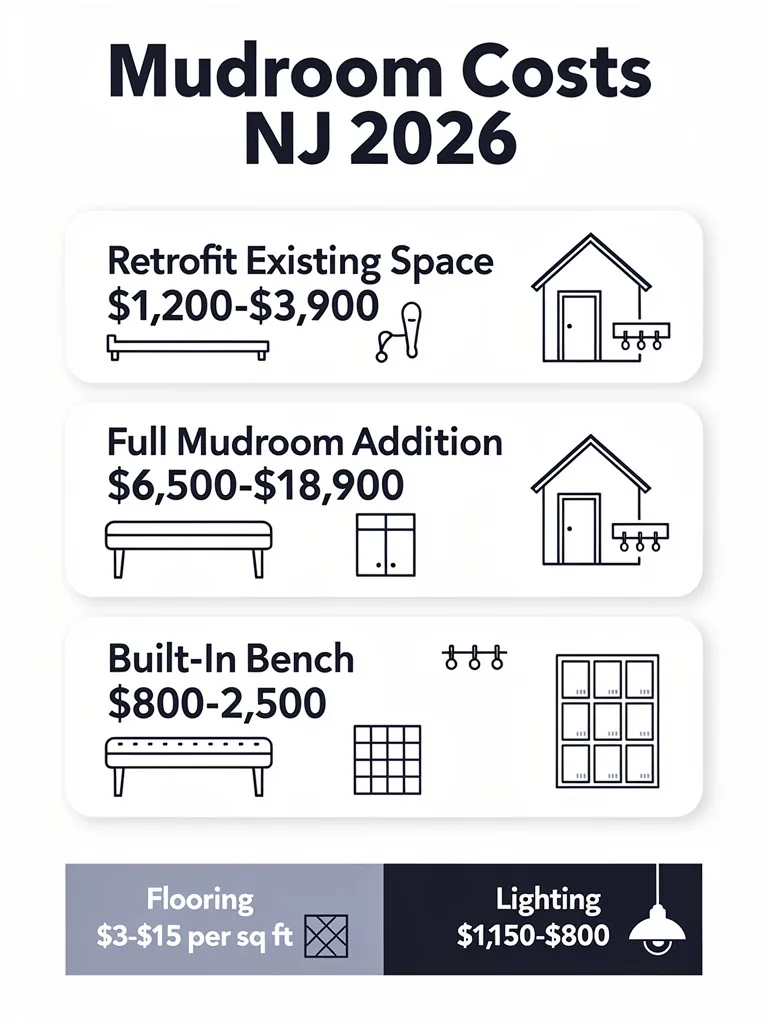
Adding a mudroom to your New Jersey home costs between $6,500 and $18,000 in 2026, depending on size, materials, and how much custom storage you build in. But you don’t need a full addition to get organized, a mudroom build-out using an existing entryway, garage side wall, or back hallway runs roughly $1,200 to $3,900 for built-in benches, cubbies, and shelving.
Monmouth County winters are brutal on entryways. Wet boots, muddy sneakers, soaked jackets, and dog leashes all pile up in the same spot. A functional mudroom isn’t a luxury here; it’s the difference between a clean house and a daily cleanup routine.
Key Takeaways
- A full mudroom addition in NJ costs $6,500–$18,000, while retrofitting an existing space with built-in storage runs $1,200–$3,900.
- Built-in mudroom benches with cubbies cost $800–$2,500 depending on size, material, and whether they’re custom-built or pre-fab.
- Custom closet and locker systems run $1,100–$2,900 for a typical 4–6 person family setup.
- Mudroom flooring (tile, vinyl, or sealed concrete) adds ***$3–$15 per sq ft,***a critical upgrade for homes with a garage or exterior entry.
- Lighting and electrical for a mudroom (overhead, accent, charging station) runs $150–$800, depending on circuit needs.
Mudroom Build-Out Options and What Each Costs
Not every mudroom needs a new addition. Most Monmouth County homes have an existing space that can be converted a garage entry wall, a back hallway near the kitchen, or even a section of an oversized foyer. Here’s the cost breakdown by approach:
Option 1: Retrofit an Existing Space
This is the most common and cost-effective approach. You take an existing 4×6 to 6×8 foot area near an exterior door and build in storage, a bench, and durable flooring.
| Component | Cost Range | What It Includes |
|---|---|---|
| Built-in bench with cubbies | $800–$2,500 | Bench seat, shoe cubbies below, wall hooks above |
| Wall lockers/cubbies (per person) | $300–$700 | Coat hooks, shelf, basket, cubby — each |
| Floating shelving | $150–$500 | Above-bench storage for hats, bags, and mail |
| Durable flooring upgrade | $300–$1,500 | Porcelain tile, LVP, or sealed concrete for 30–50 sq ft |
| Paint/finish walls | $200–$500 | Moisture-resistant paint, trim repair |
| Lighting upgrade | $150–$800 | New overhead fixture, accent lighting, or outlet add |
| Total (30–50 sq ft retrofit) | $1,200–$3,900 | All of the above, labor included |
Option 2: Full Mudroom Addition
If your home doesn’t have any usable existing space, adding a dedicated mudroom means extending the footprint of your house.
| Component | Cost Range | Notes |
|---|---|---|
| Framing and foundation | $3,000–$8,000 | Slab or crawl space, wall framing, roof tie-in |
| Exterior door and windows | $800–$2,500 | Weather-sealed entry door, sidelights optional |
| Built-in storage and bench | $1,500–$4,000 | Custom lockers, cubbies, coat hooks, shelving |
| Flooring | $500–$2,000 | Tile or sealed concrete, radiant heating optional |
| Electrical and lighting | $500–$1,500 | Outlets, overhead lighting, exterior light |
| HVAC extension | $1,000–$2,500 | Duct extension or standalone heater |
| Total (full addition) | $6,500–$18,000 | Varies by size, materials, and utility extensions |
Most Long Branch and Monmouth County homeowners go with Option 1, retrofitting an existing garage entry or back hallway. The cost difference is dramatic, and the functional result is nearly identical for daily use.
Built-In Bench with Cubbies: What to Expect
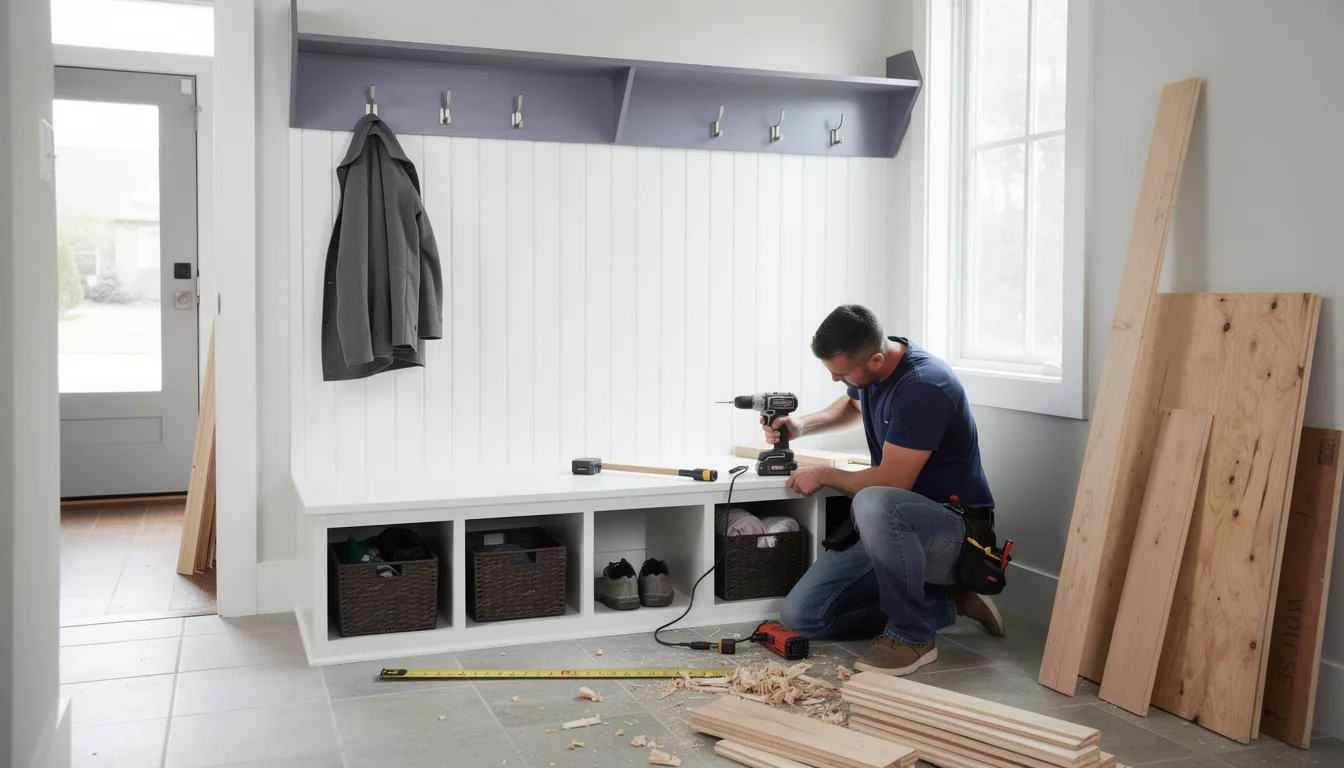
The built-in bench is the anchor of any mudroom. It’s where you sit to take off boots, where kids drop their backpacks, and where the dog leash gets hung before it disappears under a pile of mail.
- Pre-fab bench with cubbies: $400–$1,200
- Custom-built bench: $800–$2,500 1. Built to fit your exact wall width and ceiling height 2. Integrated cubbies sized for your family’s needs 3. Can include hidden storage, charging outlets, or coat hooks in the back panel 4. Higher material quality (plywood vs. particleboard)
- DIY bench with cubbies: $115–$400 in materials 1. Viable for a homeowner with basic carpentry skills and tools 2. Requires measuring, cutting, assembly, finishing, and wall anchoring 3. The time investment is a full weekend for a first-timer
For most families, a custom-built bench in the $1,000–$1,800 range is the sweet spot — it fits the space perfectly, uses durable materials, and includes the storage density that a pre-fab unit can’t match.
Mudroom Flooring — The Most Overlooked (and Most Important) Decision
Your mudroom floor takes more abuse than any other surface in the house. Water, salt, mud, gravel, pet paws, and dropped keys all hit that floor daily. The flooring choice you make here determines whether you’re mopping every night or once a week.
| Flooring Type | Cost per Sq Ft (Installed) | Water Resistance | Durability | Best For |
|---|---|---|---|---|
| Porcelain tile | $5–$15 | Excellent | Excellent | High-traffic mudrooms, families with pets |
| Luxury vinyl plank (LVP) | $4–$12 | Excellent | Very good | Budget-friendly, easy DIY install |
| Sealed concrete | $3–$7 | Excellent | Excellent | Garage-entry mudrooms, modern aesthetic |
| Brick pavers | $8–$20 | Excellent | Excellent | Rustic / farmhouse style |
| Sheet vinyl | $2–$5 | Good | Moderate | Lowest budget option, less durable |
Porcelain tile is the top choice for Monmouth County mudrooms because it handles water, salt, and abrasion without showing wear. A 40-square-foot mudroom in porcelain tile runs $800–$1,800 total, including demo, backer board, tile, and labor.
Smart Mudroom Design: Storage That Actually Works
The best mudrooms aren’t the prettiest; they’re the most functional. Here’s what makes a mudroom work for a busy Monmouth County household:
One cubby per person, minimum. Each cubby should be at least 14 inches wide, 14 inches deep, and 12 inches tall — enough for a pair of shoes and a backpack. Add a coat hook above each cubby.
A bench at the right height. Standard bench height is 18–20 inches from the floor. Anything higher is uncomfortable for kids. Anything lower is awkward for adults.
A landing zone for mail and keys. A small shelf or drawer at standing height near the door catches items that otherwise end up on the kitchen counter.
A place for the dog. If you have a pet, build in a leash hook at bench height and a small bin or basket for toys and waste bags near the door.
An outlet for charging. A single duplex outlet above the bench charges phones, powers a vacuum, or runs a space heater in January. If the existing wall doesn’t have an outlet nearby, running one costs $150–$400.
How Any Time Any Job Handyman Can Help
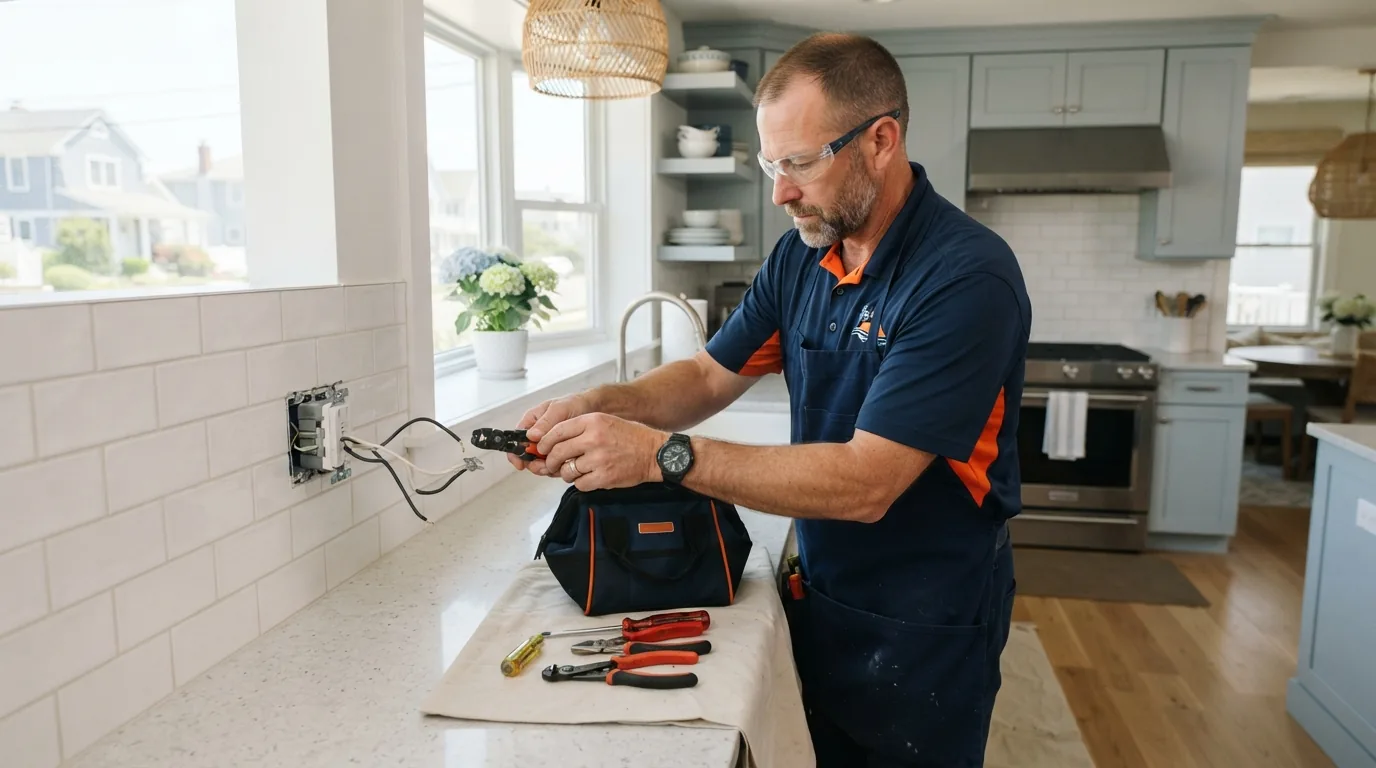
A mudroom build-out touches carpentry(bench and cubbies), electrical work (outlets and lighting), flooring (tile or LVP installation), and painting — exactly the kind of multi-trade project where one crew saves time and coordination headaches.
Any Time Any Job Handyman handles mudroom retrofits, custom bench and cubby builds, flooring installation, and all the finishing work that turns a messy entryway into a functional mudroom. We’re available 24/7 and offer free quotes in 30 minutes. Call or text (732) 924-8444.
Frequently Asked Questions
1. How much does a mudroom addition cost in New Jersey?
A full mudroom addition in NJ costs $6,500–$18,000. Retrofitting an existing entryway space with built-in storage runs $1,200–$3,900.
2. How much does a built-in mudroom bench cost?
A pre-fab bench with cubbies costs $400–$1,200, while a custom-built bench runs $800–$2,500, depending on size, material, and storage features.
3. What’s the best flooring for a mudroom?
Porcelain tile is the top choice; it handles water, salt, and abrasion without showing wear. LVP is a close second for budget-conscious homeowners. A 40-square-foot mudroom in porcelain tile runs $800–$1,800.
4. Can I build a mudroom bench myself?
Yes. A DIY mudroom bench with cubbies costs $115–$400 in materials and takes a weekend for a homeowner with basic carpentry skills. Wall anchoring and level installation are essential for safety.
5. How many cubbies should a mudroom have?
Plan for at least one cubby per household member. Each cubby should be at least 14×14×12 inches for shoes and backpacks. Add a coat hook above each cubby and a shared shelf for mail and keys.