
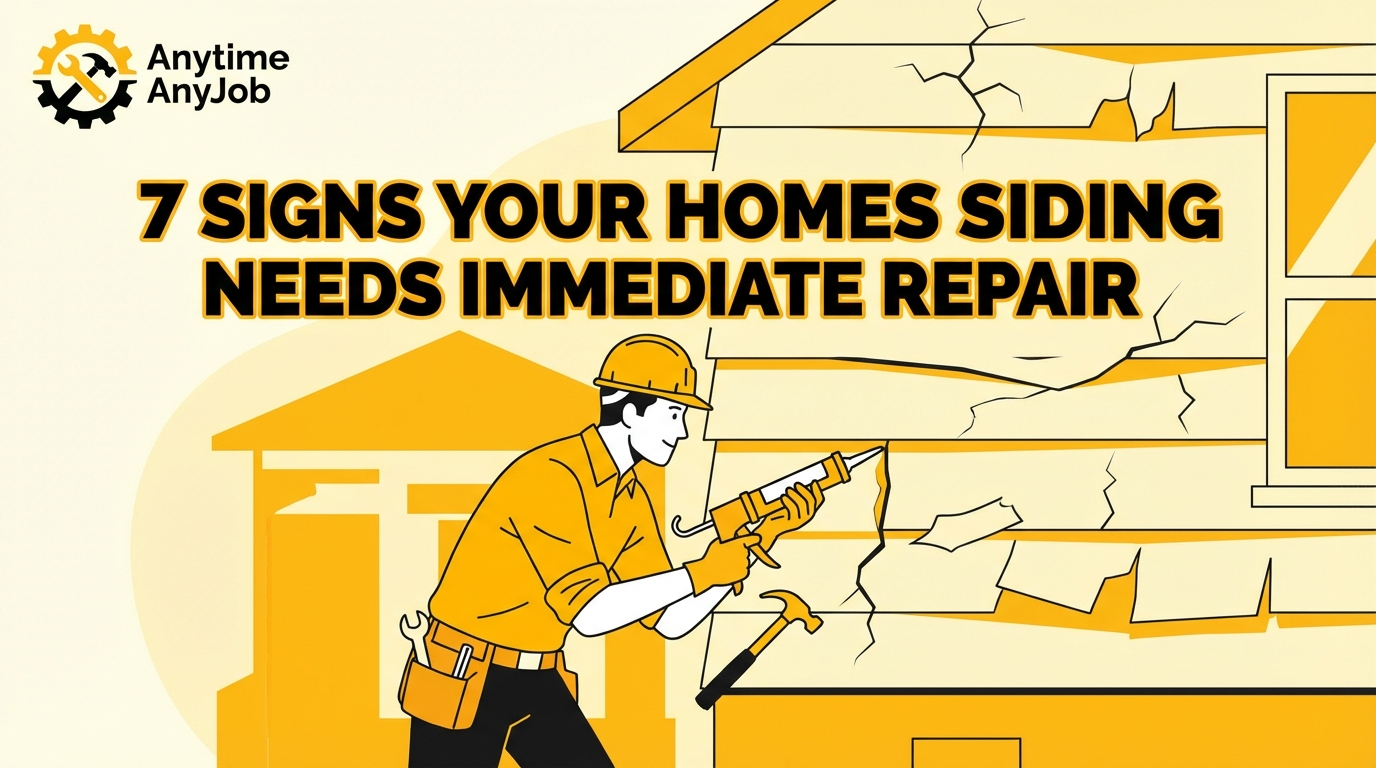
Your siding does more than make your home look good. It’s the first line of defense against New Jersey’s weather — the cold winters, the summer humidity, and the coastal storms that roll through Monmouth County every year.
When siding fails, it doesn’t just hurt curb appeal. Water gets behind the panels, mold sets in, insulation breaks down, and what started as a simple repair turns into a major structural project.
The key is catching problems early. Here are the seven warning signs that your siding needs attention now before the damage gets worse and more expensive.
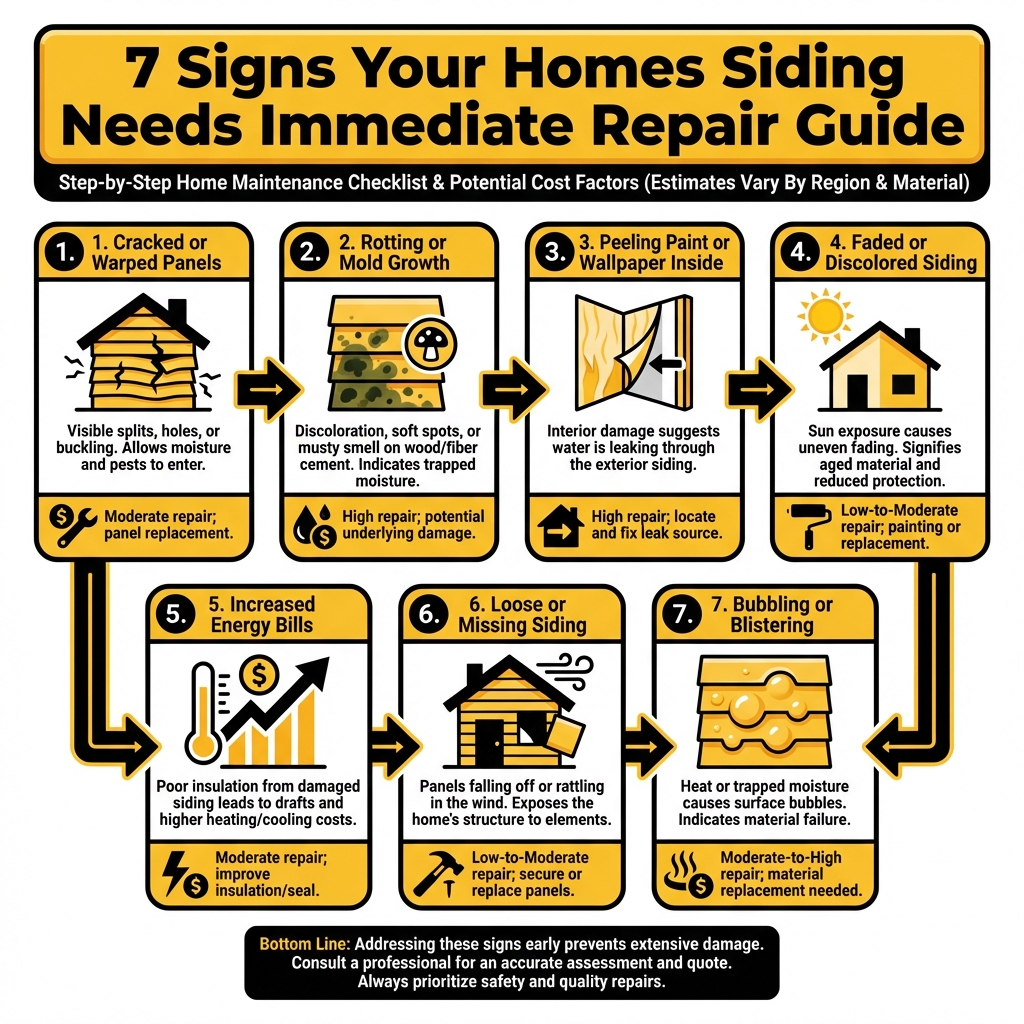
1. Visible Cracks, Holes, or Gaps in the Panels
This is the most obvious sign, and it’s one homeowners sometimes write off as “just cosmetic.” It’s not.
Cracks, holes, and gaps in siding panels are direct entry points for water. Once water gets behind siding, it soaks into the sheathing, insulation, and framing. The result: rot, mold, and eventually structural damage that costs far more to fix than the original crack.
Even a small gap where two panels no longer meet flush is enough to let water in during a heavy rainstorm. If you see daylight between panels, or if individual boards have visible splits or punctures, call a professional before the next rain event.
Siding repair in Long Branch should be treated as urgent, not a project to add to the “someday” list.
2. Warping, Buckling, or Bubbling
Healthy siding sits flat against the exterior wall. If you notice panels that are curling outward, buckling in the middle, or showing bubbles under the surface, that’s a sign of moisture trapped beneath the material.
Warping and buckling are especially common after a harsh winter like those we see in Monmouth County. Freeze-thaw cycles cause expansion and contraction in siding materials. Over time, this breaks down the adhesion and allows moisture to sneak in.
Bubbling is a specific red flag: it typically means water is actively sitting between the siding and the house wrap underneath. Left alone, that moisture will rot the sheathing and eventually compromise the structural integrity of your wall.
If more than a small section is warped or buckled, the damage often extends further than it appears. A professional inspection will tell you whether targeted repair or a broader replacement is the right call.
3. Mold, Mildew, or Fungal Growth on the Surface
Some surface mold on siding can be cleaned with a pressure wash. But if you’re seeing persistent mold, mildew, or algae growth that returns quickly after cleaning, that’s a signal that moisture is being trapped rather than repelled.
Mold patches that appear regularly, especially in the same spots, indicate that the siding is no longer effectively shedding water. The surface may look intact, but moisture is migrating through micro-cracks or compromised seams and feeding the growth from beneath.
In New Jersey’s humid summers, mold can spread quickly once it establishes itself. Beyond the aesthetic problem, mold on or behind siding can migrate into wall cavities and eventually affect indoor air quality.
If you’re scrubbing the same patches of mold every spring and they keep coming back, that’s your siding telling you it needs repair, not just a cleaning. Contact us for a siding inspection to find out what’s really going on beneath the surface.
4. Peeling Paint or Fading That Won’t Stay Fixed
Properly functioning siding holds paint or finish for years. If your paint is peeling, bubbling, or fading faster than it should — and especially if you’ve repainted within the last few years and it’s already deteriorating the underlying siding material again is likely failing.
Paint doesn’t just peel because of sun exposure. When moisture migrates from behind the siding outward, it pushes the paint film off the surface. This is called moisture-driven paint failure, and it means the problem isn’t your paint, it’s your siding.
Frequent repainting is an expensive band-aid on a structural problem. According to James Hardie, one of the leading siding manufacturers, a shortening maintenance cycle where you’re repainting or re-treating more and more frequently is a clear indicator that replacement or significant repair is more economical than continuing to patch.
5. Noticeably Higher Energy Bills
Your home’s siding, combined with the insulation and house wrap beneath it, plays a significant role in your home’s thermal envelope. When siding cracks, gaps, or deteriorates, conditioned air escapes, and outdoor air infiltrates.
If your heating and cooling bills have been creeping up without an obvious explanation, no major changes in your HVAC system, no new appliances, and compromised siding could be the culprit. Drafts near exterior walls, or cold spots in rooms that border outside walls, are additional clues.
The U.S. Department of Energy notes that air infiltration through damaged exterior components is a significant contributor to energy waste. Properly sealed and intact siding is one layer of your home’s defense against this loss.
Before spending money on HVAC upgrades or additional insulation, have your siding inspected. Fixing the exterior envelope first often resolves the energy efficiency problem at the source.
| Warning Sign | Urgency Level | Potential Risk If Ignored |
|---|---|---|
| Cracks or holes | High | Water intrusion, structural rot |
| Warping or buckling | High | Active moisture beneath panels |
| Persistent mold/mildew | Medium-High | Mold spread, air quality issues |
| Peeling paint (recurring) | Medium | Accelerating material failure |
| Rising energy bills | Medium | Ongoing cost increase, hidden damage |
| Soft or rotted sections | Very High | Structural compromise |
| Pest damage or entry points | High | Infestation, structural damage |
6. Soft Spots, Rot, or Sponginess When You Press the Panels
This one requires hands-on inspection, but it’s worth doing. Walk the perimeter of your home and gently press on different sections of siding. Healthy siding should feel firm and solid. If sections feel soft, spongy, or give slightly under pressure, you have rot.
Rotted siding is not a cosmetic problem; it’s a structural one. Once siding material begins to rot, the damage spreads to the substrate beneath: the sheathing, insulation, and in severe cases, the framing itself.
Pay particular attention to areas near the ground, around windows and doors, and anywhere two siding panels meet at a joint or corner. These are the areas most prone to water pooling and moisture infiltration.
Soft sections should be treated as urgent repairs. Any Time Any Job Handyman can assess the extent of the damage and replace affected sections before the rot spreads.
7. Obvious Pest Damage or New Entry Points
Woodpeckers, carpenter ants, termites, and mice don’t care what your siding is made of; they care about getting inside. If you’re seeing holes that look like they’ve been pecked, bored, or gnawed, your siding has been compromised as a pest barrier.
Woodpecker activity is especially common in New Jersey, and it’s often a sign that insects are already living inside the siding material. The birds are following the food source. That means you may have a two-problem situation: pest damage to the siding and an insect infestation inside the wall cavity.
Any opening in siding, regardless of size, is also an entry point for mice and other small rodents once temperatures drop in the fall. Sealing pest entry points in siding is not optional; it’s a health and safety issue.
If you’re seeing pest activity on your exterior walls, have the siding inspected and repaired before the problem escalates. Call (732) 924-8444 for a same-day assessment.
When to Repair vs. When to Replace
Not every damaged section requires a full siding replacement. Localized damage, such as a few cracked panels, a small rotted section, and gaps around window trim, can often be repaired effectively at a fraction of replacement cost.
Replacement becomes the right answer when:
– Damage covers more than 30–40% of the siding surface
– Multiple signs appear simultaneously across the home
– The existing material is at or near the end of its expected lifespan
– Moisture damage extends into the sheathing or framing
An experienced handyman can assess whether you’re dealing with a repair situation or a full replacement. The key is not waiting to find out that the longer the compromised siding sits, the more water gets in, and the more expensive the eventual repair becomes.
Get Your Siding Inspected Before the Problem Gets Bigger
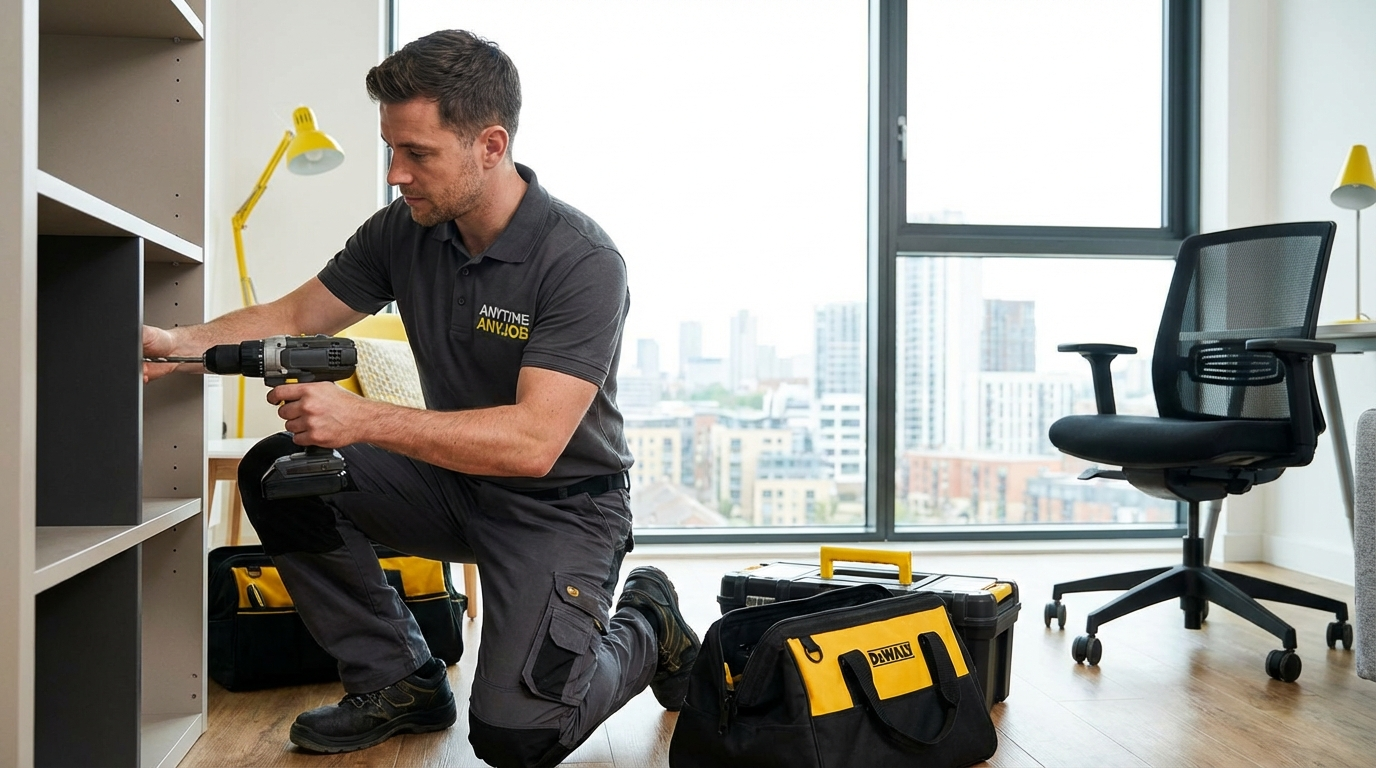
Any Time Any Job Handyman serves all of Monmouth County, NJ, including Long Branch, Red Bank, Neptune, Middletown, and surrounding areas. We’re available 24/7, 365 days a year, and we provide free quotes within 30 minutes.
If you’ve noticed any of the signs above, don’t wait for the next rainstorm to confirm the problem.
Call or text us at (732) 924-8444, and we’ll assess the damage and give you a straight answer on what it takes to fix it.
Fully licensed and insured. Serving Monmouth County, NJ.